Why Americans Don’t Travel Overseas
October 10, 2008
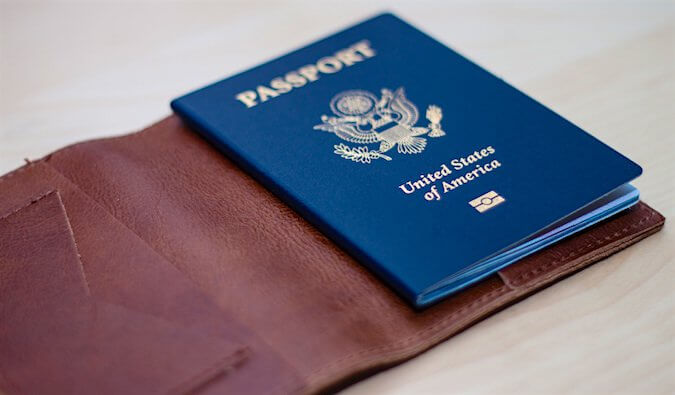
We’ve all heard the alarming statistics- only 15% of Americans own a passport. That number is rising but only because Americans are required to show a passport when going to Mexico and Canada now. Vice Presidential candidate Sarah Palin only got her passport last year and has only been to military bases in Iraq and Germany. In fact, she has implied that traveling is for the rich: “I’m not one of those who maybe come from a background of, you know, kids who perhaps graduate college and their parents get ‘em a passport and give ‘em a back pack and say go off and travel the world. Noooo. I worked all my life… I was not, uh, a part of, I guess, that culture.”
So why is that America, a country with 300 million people and the world’s superpower, turns a blind eye to the rest of the planet and political figures tout their lack of overseas travel as a plus? I believe there are a few reasons:
First, there is size. Forget about post 9/11 politics for a moment. Most family vacations in America are to other parts of America. Why? Because the U.S.A. takes up a whole continent and we have all the world’s environments in our states. Need beaches? Head to Florida. The tropics? Hawaii. Desert? Arizona. The cold Tundra? Alaska. Temperate forests? Washington. This attitude is best summed up by a response I got from a friend in Iowa: “Why would you want to go to Thailand? It’s far and scary. If you want beaches, just go to Florida.” Americans simply don’t see the need to go anywhere else when they can do it all in their country, especially when they are afraid of the world.
Which brings me to my second point- fear. Americans are just scared of the world. I mean really scared. Maybe even petrified. In this post 9/11 world (even before it), Americans have been taught the world is a big scary place. There are terrorists outside every hotel waiting to kidnap you. People don’t like you because you are American. The world is violent. It’s poor. It’s dirty. It’s savage. Only Canada and Europe are O.K. but, if you go there, they will still be rude to you because you are American. No one likes us. The sky is falling!
Even before 9/11, the media created an environment of fear. If it bleeds, it leads right? Even prior to 9/11, the media played up violence at home and abroad. Pictures of riots in the foreign streets, threats against Americans, and general violence were all played up to portray a violent and unsafe world. Politicians now tell us “they hate you” as former NYC mayor, Rudy Guiliani, did during his campaign. It’s US vs. THEM!!!

Bombarded by this for decades, Americans think this myth is reality and don’t want to leave the states. People always ask me why I want to leave the US to travel. Isn’t the U.S. just as good? No one likes us out there people say.
To Americans, the world is a scary place and it’s a perception only reinforced by the media and politicians.
Finally, it is because of cultural ignorance. Yes, I said it- it’s because Americans are ignorant. I mean ignorant as they simply just don’t know what is going on outside their borders. I mean I don’t blame them. When you are told the world is scary, why would you want to care about it? Why would you want to go to places where they want to kill you? So Americans don’t put an emphasis on learning about the world. We don’t take languages, avoid overseas programs, and don’t talk about our world in schools. Our schools teach one foreign language: Spanish, and that is only because we have a large Spanish speaking population in the country not because we want to go to Spain. The media doesn’t focus on the world except if it relates to something bad and our politicians encourage us to erect walls not break down barriers.
Some people argue that it’s because America is “far” from the rest of the world as if there is an insurmountable distance to go to get places. However, New Zealand is further geographically yet they are encouraged to go out and explore the world. It’s further for them to get anywhere in the world than it is for Americans. In the age of the internet, Twitter, You Tube, and airplanes, it is easy to go places. Distance is no excuse.
No, Americans don’t travel because of culture not location. Sure, it’s not universal. There are plenty of Americans out there exploring the world and breaking down cultural barriers. They come back and break down myths and encourage the world to get involved. But even in the more liberal places in America, you see this attitude that America is the world’s only safe country, that most of the world is pretty scary. In reality, Americans have an image of the world that is totally divorced from reality.
The sad irony is that we created the world we are so afraid of. America’s push for a globalized world brought many players onto the world stage. It helped the Chinese dragon emerge from its cage, brought India in the game, helped Brazil, and tore down communism. Now, we look at the world scared that we know longer understand it or our place in it. Instead of trying to learn more about this new world, we keep erecting barriers and burying our head in the sand.
Yet, I am hopeful. The future of the world requires more integration and young Americans, growing up in this post 9/11 environment are actually more interested in learning about other countries than shunning then. I think the future will be bright so long as political leaders don’t wall us off completely before then.
Related Posts
Comments
70 Responses to “Why Americans Don’t Travel Overseas”
Got something to say?


Nice post, Matt, good points and well-written. Want to grab a bucket or three tomorrow night?
I feel the same way about Americans. That’s why I left the country for good.
I also think it has a lot to do with America’s economic and cultural dominance over the world in the past 50 years or so. The impact on the world has been extraordinary - and many Americans take that as cultural supremacy.
A - “there isn’t much “to learn” out there, since Americans are teaching all of the lessons” - mentality.
That’s shifting though, the US will no longer be the center of the world cultural and economy. There are many other places in the world coming in to fill those roles, like China, India, Brazil, etc… and down the line.
Not know a second language, never been to Germany, think they’re all out to get you?
America will soon have to get over that if they want to stay competitive in the world. Traveling is the best way to get perspective in life -
Nicely written Matt! If you think Americans don’t travel overseas, the figure is even lesser in India. However this mostly has to do with economic factors, not cultural. Domestically they travel a lot!
Great post, and it really spells out a lot of things I’ve told people for a long time.
I’m of the opinion that the biggest reason Americans don’t travel internationally more is because of their fear of the language barrier, as opposed to the actual language barrier itself. I think if they would just try it, they would see that its not so bad, and that most of the negative stereotypes Americans hold about foreigners just aren’t true.
Ugh. Sorry Matt, I don’t like this post.
I think it’s far more complex then just “fear” and “ignorance”. I think it’s easy to say negative things about Americans– make broad sweeping generalizations– hey everyone’s doing it! But I actually come from the school of thought that Americans are not that much different than anyone else. Put up some big barriers to travel (cost, geography, access to local alternatives) and they won’t do it.
Heck, people from the UK think going to the beach in Spain is “Travel”. The truth is, that Florida is farther away for many Americans than Spain is for most Europeans. You don’t see the average European traveling to say New Zealand. Why would they? They have everything they need in the EU. So yes, florida isn’t as sexy or “exotic” as say Morocco, so it’s easy to take pot shots, but I am firmly convinced Americans aren’t that different. If we had a “Spain” or a “Morroco” nearby that was the same cost as it is for EU folks, then damn straight people would go there. (A ticket from the UK to spain can be $100–from NY to Spain can be over $1000) We’re not stupid, lazy or fearful– just geographically unlucky (or lucky depending on you POV).
Anyway, just had to nicely disagree (hope this was nice) and offer a different perspective.
I’ll add the thing that always comes up when I discuss this with Dave Roth (thanks for the link Dave), and that’s Americans are not willing to use their time off to travel that far. In general, we get far less time off than our European peers and we dislike the idea of “gambling” with that time. When you only have 10 days of vacation time available for the year, it becomes daunting to spend an entire day flying somewhere and another day flying back in order to spend 4 or 5 days in another country when you might not even enjoy yourself there (because of those people we’re afraid of/who will be rude to us).
We’re more likely to spend those days here and there taking in the sites that our own state/neighboring state has to offer.
Maybe Americans don’t travel much overseas because they were never taught to do so as children.
Crossing international borders can be a scary and lonely leap to take if you’ve never been shown that it’s safe, interesting, and worthwhile.
We international travelers take a LOT of credit for our own worldliness, but I think our parents probably deserve it more than we do.
To build on what Dave said, I think that a lot of it has to do with the American workaholic attitude, where we only get a measly two weeks off and a lot of people don’t even use *that* time. Compare that with the standard European six weeks of vacation per year, combined with a culture (in Europe and much of the rest of the world) that encourages work-life balance, and we in the US are at an obvious disadvantage.
Oops, sorry, make that what *Mark* said!
@Tim: Yes!
@Anil: I agree. I think there is a bit of that in why Americans don’t go overseas. They think “hey, they copy our culture anyways. What’s there to see? I’ll go to Florida.” But that ties into a general apathy towards the world. I mean Sarah Palin says she can learn about the world from books as if it is a substitute. All the things are interconnected. The apathy leads to poor education in the schools which leads to more apathy and ignorance. It is a vicious cycle.
@Christine: In my travels around the world, i encounter people from everywhere. Europeans are the dominate people in Asia! They are all over the place. I can’t walk 10 feet without tripping over a Brit or German. During December, this place is crawling with Europeans!
There are plenty of exotic locations in this hemisphere. Why don’t many Americans go to Mexico (not Cancun) or Guatemala or Honduras or South America? They are not that far. People are even scared to go to Puerto Rica or Jamaica if it’s not a sterilized experience.
Geography doesn’t explain why Kiwis or Aussies go to places around the world, even when it costs them just as much money.
It’s a culture thing and our culture does not put an emphasis on going abroad.
@Mark: I think time can be a factor. I mean who wants to waste 2 days flying to Australia? Not many. However, with so many places close by, the two week excuse doesn’t cut it with me. Europe is 6 hrs from the East coast. If you live on the west, you are 6 hours from central America or 14 from Tokyo. It’s doable.
@Sonia: Yes, we do not put an emphasis on vacation time. But the Japanese, British, Koreans work just as hard if not harder but they still manage to get away. But yeah, Americans favor all work and no play but when we do play, it is still not abroad.
There are lots of reasons, and I agree with Christine: they’re complex. While speaking with a German hotel owner in Oaxaca, Mexico, last week, we hypothesized about the reasons why more Americans don’t visit the interior of Mexico. We came up with about five reasons. It’s worth point out that the majority of his clients come from Europe and Asia.
And to clarify: US citizens need a passport for air and water crossings between the US and Canada. They can still make land crossings without a passport. The latest news is that the deadline for the change has been pushed back to June 2009.
I totally agree with you on this one Matt. I think it is part of American culture not to be interested in the rest of the world and I think that fear and cultural supremecy have a lot to do with it. Yes, this is a huge country but so is Brazil and China. I’ve met many more Brazilians and Chinese on my travels than I have Americans. I do think that limited vacation time is a very real factor, however. It takes a day or two to skip across continents and if you only have 7 days, it really isn’t worth it. That being said, there are still places that are only hours away in flight time (Antigua, Belize, Martinque) that Americans just never seem to consider very much. I also think that Americans are spoiled and are leery of going any place that doesn’t have all the comforts of home. So they stay home. Hopefully, the global changes in power structures will be forcing many out of their bubbles.
I agree. When we told our friends and family that we were going to travel around the world for a year, they were jealous but very few of them wanted to do the same. We told some English people that we made the local news in Kentucky because we were traveling the world and they all laughed at us. Perspective is a funny thing.
I do believe that more Americans should travel. I think it’s important to gain perspective, break down prejudice, etc. Your reasons why we don’t are good; however, personally, I haven’t been able to do any traveling (outside of Canada and Mexico)–not for the reasons listed above but because I’m broke.
Very nicely written btw. I particularly like: “our politicians encourage us to erect walls not break down barriers.” Well said.
I see both sides of the argument.
Yes its a lot more complex but at the same time, Matt makes a valid point about geography.
Why not Central America and the Caribbean Islands?
Also, I’ve noticed that Americans tend to be creatures of habit - returning to the same vacation spot in Florida or same getaway in a National Park every year.
Taking out financial capacity (’cause ‘broke’ is the same the world over), if the Aussies and Kiwis can do it being out in the middle of nowhere, Americans should be able to do it readily.
The same people who complain about the cost of travel waste huge amounts of money on other stuff. . .coffee. . . . giant televisions. . . . .interest on loans for everything. If you make travel a priority, you can do it for much less than you’d think, and without making gigantic sacrifices.
It used to be you could fly to Europe from the east coast of the US for $350 or so in the off season. Taxes, fees, security theater costs plus the weak dollar have fixed that. But it’s still doable if it’s a priority.
More vacation time would be nice though. . . .
I agree with Matt, there is an overabundance of “us and them” finger pointing and barrier creating going on right now. It’s not just in the USA. I live in Canada, and am faced with similar attitudes on a daily basis, if somewhat on a smaller scale.
It boils down how your culture values the “intangible”. The intangible benefits of international travel are priceless: personal growth, knowledge, awareness, and the list goes on and on. Those are the things we come home with when we travel. Can’t put that on a t-shirt.
Explaining or quantifying the intangible is near impossible in a culture that puts most of it’s efforts and places a higher value on acquiring the tangible or material things in life.
On top of it, the work ethic/environment in North America which actively discourages taking time off doesn’t help matters.
When I decided to move to Korea, it was ridiculous how many times I was asked (and always by adults) “Why would you go to a third world country?!?” sigh….
That’s not fair, Matt.
Lots of Americans travel: They are doing tours of duties in dubious conflicts.
Seriously, great post. I think there is a generation gap regarding travel. I have seen many more young Americans in China in the past two years than I did in the two years before that.
There is hope in changing the isolationist attitude (that stretches into history) and it lays with the younger generation that didn’t grow up with the Cold War stuffed down their throats.
Maybe in Europe people don’t like Americans, but in China they do. We’re so popular! We were even on national TV - and on the big outdoor screen over the center of Nanjing!
I do think it’s cost, though. It’s so expensive to buy a plane ticket for your whole family. It’s much easier to hop in a car and drive 10 hours to vacation. Before China, I only went to France for a week, which took all my savings at the time. In Europe, it’s easier for them to travel; they only need to take trains to the border.
I’m so much safer in Paris (gun crime all but unheard of) than I ever am in Washington, DC (homicides, shootings and armed robbery make the news everyday) and yet my mom worries for my safety much more when I’m overseas…While I don’t think it’s always the reason Americans don’t travel, I do think it’s an important factor. Thanks for pointing it out!
Matt! Usually i love your posts, but i have to disagree partially here. Sure, I’ve met some Americans who fall into this category, but there are people all over the world who do not leave their countries because of similar reasons.
I think that there are many more Americans who desire global travel, but feel that they cannot afford it, as many travel options seem very expensive/unreachable. We live in a culture here that promotes eating well and often, buying and driving big expensive vehicles, owning closets full of all sorts of fashions and trends. I have spoken to people who earn a good income who think that they can’t afford to visit Europe or Asia because of the expense, but never look at ways that they can cut back on their own expenditures to make it happen.
Also- Americans tend to have larger families, and every kid you have to buy a plane ticket for is an extra couple grand or so. When my husband and i went to London, we were able to only take our oldest child, leaving the younger two (who probably wouldn’t have even been cognizant of where we were or what we were doing) with grandma. It was much easier bolting around the streets of Shepherd’s Bush with one 8 year-old in tow than three fighting squirming small ones! Some year soon here, we’ll take the middle child on her own adventure.
Don’t fall into that easy rut of America bashing, we’re not all the stereotypical portrayal!
A lot of people seem to be bringing up money but as Lola pointed out, broke is the same in all languages. Why is that countries with less currency value seem to still manage to travel the world? Aussies, Kiwis, Canadians, South Africans, Isrealis, and Brazilians all seem to find a way. We may complain about the weak dollar but we still have it good compared to these countries. Yet despite distance and cost (flights to OZ or NZ are not cheap), they manage to explore the world.
Saying “it’s too expensive” is a weak crutch. I run this site to show you that travel is not expensive. The problem is Americans have this view of travel as all 5 star inclusive resorts. and as fly girl said, they expect the comforts of home. So they see the prices on expedia and go wow! we can’t afford that. But the reality is is that travel is not expensive. There are tons of deals out there and if you stay somewhere local, you always get a better room rate.
If you want to go somewhere, you can save up for it. It may be expensive taking 5 kids to europe but there are other places where you can take them that are just as close. As all the RTW families show us, you can travel with kids and travel cheaply.
I see your point. Flying to Australia may not be feasible. But why not Jamaica or Belize or Honduras? These countries are cheap when you get there and can be just as amazing as Europe.
As many people have pointed it, people still are worried when people go to Paris and, apparently Korea!! lol
However, as Stevo, said lots of young people are traveling now and I am very hopeful for the future. For the boomers, I think 9/11 made them more afraid but for the youth, it made them want to see why this happened.
—
On another note, i am happy i got so many responses from this post and while we may not totally agree, at least we all think Americans should travel more! I am also very happy that this discussion is going on and thank you all for commenting on this post!
Am I the friend from Iowa? I don’t think I made that exact statement but that’s a decent enough summary. Well, a lot has happened to me since the whole Thailand thing (which I was eventually game for!) and I’d like to retract any and all statements that I made like that. I’ve been traveling quite often now (mostly in the US though) and I’d say now, I completely understand the need to get out and see things other than what you are used to.
By the way, your website looks fantastic! Great job!
Yes! Props for mentioning Honduras as a place to visit… anyways, agree with the visiting places that are nearby. I wanted to visit Europe on this trip I`m on before looking at the map and realizing that South America would be just as good, cheaper, and I dominate the language (minus in brazil). I remember when I told a co-worker I was going to Honduras for 30 days, she laughed at me and said
“Why the hell would you want to go there for?”
Poor ignorant and narrow minded fool. Assumes the place is a dump for being a poor country, and just for that she or many another person would pass on going there because its not the americanized Costa Rica or Belize. Honduras has not been exploited (cept for the Bay Islands) for tourism, and that is what makes it such a great place to visit. It has everything Costa Rica or Belize would have and probably at a cheaper rate. Just don`t go during Holy Week, then your screwed with all the Salvadorans and Hondurans who invade the beaches.
And your right on this point: Visit something other than cancun in Mexico. Even Mexicans say that Cancun is not the real deal Mexico. Go to some small town in the interior, or go to Monterey, Veracruz or Guanajuato.
Thats my rant for the day… AND VISIT HONDURAS!
Many of my other thoughts have already been posted here–eloquently I might add–but some of your other readers. But I thought I’d throw this one out there…
I’m a bit torn right now about traveling abroad. I keep hearing the old ‘charity begins at home’ adage. With our economy in such a rough state, I feel like a traitor taking off to traipse around in Bavaria when New Orleans could probably use my money.
With limited time each year to travel, it also becomes tough to weigh my options and choose the best ways to use the time. As we become more global, family and friends continue to spread out. With two weeks to travel, many find it hard to justify hanging out in Fuji when they haven’t met their new nephew or seen their mom in over a year.
I personally have a tough time because, although there are many countries I would love to explore, I’d love to explore my own, as well. As a professional musician it irks me every day that I haven’t been to Detroit, Nashville, or Memphis. I adore animals but I’ve never set foot in the San Diego Zoo. I lived in Savannah for 3 years, but I’d like to return for a visit with my husband. Not to mention Yellowstone, Yosemite, the Grand Canyon, the AT…..
I hope it continues to become easier for Americans to travel, and I hope more and more people begin to take the plunge. At home AND abroad.
Right on the money!
and glad you posted it
Travel broadens perspectives and erases ignorance so it’s a catch 22 really!
You’re right Matt, an American doesn’t need a passport to travel when you have so many amazing things to see in your own country. As an Englishman I have many friends that have never left Europe, is there really any difference - they’re practically the same size.
I haven’t travelled much in the states (just NYC, Florida and of all places, Nebraska) but there seems to be a wide range of characters and contrasts to indulge in and it would take a lifetime to cover. Quality over quantity.
On a more selfish note, I’m glad American’s don’t have a culture of overseas travel. Look at the populations of the most popular travelling nations - Australia (21.5m), England (50m), Germany (80m), New Zealand (4m), Canada (33m). My point is, if the USA suddenly decided they were a nation of travellers then 305,000,000 (or a percentage of) would flood the worlds hostels and there’d be no room left for anyone else! It’d be like summer in Europe, but all over the world - nightmare!
To all American’s - the world IS a scary place! Stay safe at home.
I feel the same way about Americans. Born and raised there and I served 8 years in the US Marine Corps before leaving the US in 1990. I have been to over 75 countries and lived for more than a year in Asia, Africa, Europe but never South America. I have also been to 46 of the US states.
Perhaps another reason that Americans dont’ travel, from my point of view, is that many of us, especially in Canada and Austraila are first generation. We start early to go back to “motherland” or “homeland” so it gets into our blood at an early age.
Having lived in the U.S. for the past 10 years, I have found that it depends on where in the U.S you live. The coasts, ie NYC or LAX tend to travel more than the Midwest states and they seem to more about the world than the midwest chaps. Of course only my opinion.
I have encountered many people who would prefer to travel only in the U.S. Their loss.
As for me, my motto, “The world is my playground, in which I get to play in”
And now we live in China and we have the entire country and S.E Asia to explore.
I’m late to this conversation so I’ll probably repeat what so many others have said. Apologies before I proceed.
First, traveling within the US is still travel, and the options are vast. The differences are staggering between my northwest corner and the opposite corner side of the country and it’s no small undertakng to get there. There are plenty of opportunities to explore other cultures right inside our borders. To say we Yanks don’t travel is to discount our domestic adventures.
I think it’s very easy to blame us for the entire world’s woes, but I find myself wondering if it’s that simple. While we are responsible for our post 9/11 culture of fear, I was humbly reminded of something when I heard Rick Steves speak a few weeks back. We are 4% of the world’s population! Wow, we’re tiny! And yeah, we’ve historically gone around destabilizing all kindsa stuff, but it’s not like that’s new - the Brits and the Spaniards and the French did a nice job of that before we took it over. It’s tremendous vanity to think that it’s all our fault AND that the rest of the world cares. I was sort of stunned at how disinterested the Vietnamese people were in my nationality. Never mind what we did there, they wanted to talk about themselves. (Typical 20 somethings.
)
Ameri-bashing is too easy. As a traveler, I think it’s critical to talk about the things that are great about Americans instead - our optimism and multiculturalism for starters. We also need to share our stories with those who don’t travel to see if we can revive some of that curiosity that seems to be floundering - I’ll agree with you there - and I don’t think that saying “You’re afraid and ignorant” is the best possible way to do so.
@Pam: well, what else should I say? The reality is that they ARE afraid. Looking at many of the comments above- they all cite examples. And they are ignorant. I don’t mean that Americans are stupid- I just mean unaware.
I’m not bashing America. I’m stating my reasons for why I think Americans do not travel abroad. Yes they do travel in America and I said so. I am just saying that my fellow Americans don’t travel abroad.
Matt - I did not step out of the US for the first time until I was 22, and that was on my honeymoon! Now I am making up for the big loss of travel in my life at http://travelingmamas.com, where the four of us hope to inspire other families to get out there and see the world. That’s where it begins, you know, at home.
Culture? There’s so much culture in our own country. We’re the USA where each state is like its own country. Plus, in many parts of the US, you either go to college or go to work (sometimes both).
Money? Definitely I big deciding factor for most people. You can toot great travel deals all day long, but those are marketed to East or West Coast citizens. Hello. There are a whole lotta people in between that just really can’t afford an $800 plane ticket for each member of the family. I have no problem giving up my coffee and putting it in travel kitty, but I would much rather spend $1500-2000 each year and be able to spend a week with my kids away from home instead of saving up and just going one place every four years. If I wait four years, one of my babies will already be in college.
Education? I agree with you that we lack an educational level here in the US. In Europe and other parts of the world, the arts and languages are mandatory. Students MUST learn a musical instrument. Here it is a choice. Also, the only languages that are required for college enrollment are either Spanish or French. We aren’t giving the average student the ability to further their minds. It goes back to the whole “No Child Left Behind” when what we are actually doing is leaving all of our children behind. I know that I have to fight my local school system each week to get my oldest the education he needs. Not every parent or student is able to search out those resources to assist them like I am able to do. They just don’t know where to begin and it becomes a vicious cycle of non-education.
The bottom line is, there is more to why Americans don’t travel besides just fear and size. My mission in life is to encourage travel, even if it means I have to escort a group of 22 firefighters for their first visit to Mexico. At least they learned how to ask where the bathroom and prostitutes are in another language. That’s progress, right
Great post topic and awesome comments.
I think you pretty much hit the nail on the head Matt. Even when most Americans do travel, they prefer the Disney effect ie, SuperClubs, Perillo Tours etc… which provides them with all the security and expected perceptions all in one.
R(etc…)
I believe the primary barrier to international travel is economics. I agree with your points of America’s size and the point of cultural ignorance. Economics combined with the other two factors is a great inhibitor to traveling abroad.
No doubt, as you and others show regularly, the world can be traveled relatively inexpensively.
My take on American’s cultural ignorance is our upbringing in jingoistic ideology and “pax americana”. We know we are the greatest nation on earth. Right?
Most Americans want to see the world. Travel is always near the top on the lifestyle wish lists in surveys of Americans. In reality though, once you have relationships, a job, commitments, and financial obligations, the barriers to international travel are greater. It is just not that inexpensive to leave the country and most persons traveling are giving up something else. I drove the same car for 20 years until I upgraded two years ago.
Our American culture values money above all else. New Zealand and Australia have a culture which encourages people to go out and see the world as a young adult and then come home and start building your country and future.
In America, we promote building your wealth from day one. International travel is not a financial wealth builder. Those of us who travel internationally are generally driven by the social and consciousness raising aspects of travel. Not many of us make money from it.
I have lived in many states in the USA. I have traveled through nearly all of them (still trying to get to North and South Dakota). I have lived outside the USA about four years.
America is an easy place to fall through the social safety net and find yourself struggling to survive. I feel blessed to have earned an education, periodically have lucrative employment, and been in a position to travel frequently most of my life. I have experienced the downside of months of unemployment and occasionally been homeless while seeking employment. I bought a large tent 15 years ago that I’ve kept just in case.
Lots of other Americans find themselves struggling to meet basic needs of home, shelter, and family togetherness.
Americans have fear. I don’t think it is so much a fear of the world, as a fear of spending too much money on an international trip and then facing the possibility of being tossed out into the world without a financial safety net.
This is a great post and a great discussion topic. Good for you for writing about it.
Just a note on the money thing. Matt wrote:
“A lot of people seem to be bringing up money but as Lola pointed out, broke is the same in all languages. Why is that countries with less currency value seem to still manage to travel the world? …We may complain about the weak dollar but we still have it good compared to these countries.”
True, “broke” is the same everywhere, but what a lot of Americans who do travel tend to miss on this point is that there are many more broke people in the States than in, say Scandinavia.
Yes, the US is a very wealthy country - but it also has a marked income gap, and a large (for lack of a less patronizing word) underclass of working poor. Think of those 50 million Americans without health insurance - are they really going to rush out to get a passport and book a flight to Europe? Traveling the back roads of Mississippi or Louisiana was shocking at times. You don’t see poverty on that scale in France or the UK or (with the exception of the native reserves…) Canada too often.
Besides, while many of the equivalent occupants of the lower income/educational bracket in, say, the UK may have passports and travel in foreign countries, many of them don’t get beyond cheap package beach deals in Spain - the travel equivalent of an American in Acapulco or Daytona.
Also re: currency differences, I don’t think the gap is wide enough to say, look, those Canadians have a far less potent currency than ours, and THEY manage to travel. The Canadian, Aussie and Kiwi dollars generally aren’t that far below the US one (in fact, until a recent plunge, the CAD had been more or less on par or above the USD for over a year) and I don’t see it as drastic enough to really weigh much in this debate.
Matt, I think the reason a lot of people reacted strongly to this post is because it (probably accidentally) came across as blame-y. As in, not just an explanation to foreigners of why Americans travel less, but a condemnation of those Americans who don’t travel. All too often I think the “travel gap” (if we can call it that) comes down to education and income - two things I’m happy to condemn in the macro sense (as in: hey US government, educate and provide for your people!) but that I hesitate to blame on the affected individuals.
When my British roommates used to mock Americans who don’t travel, I tried to explain to them that 9 times out 10 they were essentially bashing someone for their education and income level, ie, their class. I’ll take an untraveled person with an open mind over a well-traveled classist any day…
@shannon: I agree with you on the education bit. Not everywhere parent can afford to send their kid to a private school that can give those opportunities. I think that will require government action to force schools to take a multicultural approach and begin educating people about the world. It should be mandatory. In a world so globalized now, we need it more than ever.
@Ric: I agree- American culture values money vs. relaxation/time and other cultures normally value time over money. So while we may not want to do it as long as others, we can still do it a little bit!! Americans don’t have the social safety net other cultures do but again, travel is not that expensive and is totally feasible for the majority of Americans.
@eva: I have to go teach but I’ll reply to you in a few hours when I get back!
@eva: Saying its education and money perpetuates the Palin idea that only the educated and rich can afford travel. The “poor” can’t afford to travel but the poor everywhere can’t afford to travel. If you have no money, you can’t go. Basic economics really.
But people who could save and go- don’t. Blaming poverty is a little bit of a cope out. I wasn’t implying travel is affordable for every single person. But the majority of Americans could travel if they did save a little more. My job paid 12 dollars an hr yet I still managed to save for Europe.
Brazilians have a huge wealth gap but everywhere I go I seem to run into Brazilians. Kiwis DO have a huge disadvantage. Even when the Kiwi was strong over the last few years, it still costs them about 1500 dollars to fly to Europe and, while Americans complain about the .67 Euro cents we get to the dollar, Kiwis get .50.
Saying American don’t travel because of their education and income is classist. They are “too dumb and poor” to travel? I would not go that far. By saying you need money and education to travel, you are falling into that Palin idea that is totally classist.
Education has nothing to do with it. Money has nothing to do with it. I’ve met high school drop outs on the road. I’ve met people who are trying to live off 10 dollars a day because that is all they can afford.
It simply comes down to desire. and the reality is most (not all) Americans have no desire to see the world.
15% is amazing! I definitely think the world be a different place is US politicians did more traveling when they were younger.
Interesting post. But one thing I don’t agree with - America is not a super power - not anymore. I believe that those times are over …
Great post Matt !
I know I am late in this discussion, went thru all the comments but I still feel what you said is correct. Americans live in their own world.
One eye opener for me here. Till now I thought they always think they are superior to others so what’s the use of seeing the inferiors whereas you bring out the scary part in them. I feel this statement makes them more human as well.
In India, as my fellow countryman Priyank said, economic factor plays a greater part. We do like to travel, see & understand other parts of the world but the pay packet is way too less compared to other countrymen. We can not leave the job as it is very difficult to get one again. Population plays major role here.
That said I was thinking of doing four countries of south east asia next year, I wonder how much that going to cost me.
I’m also late to this conversation. I agree that you can’t overlook the money and size side of things. But I do have to come to Matt’s defense on the fear bit.
No, obviously, it is not everyone. But we’re stationed with the U.S. Army in Germany. We have our own kaserne which could be described as a little microcosm of America (with the obvious confound of being all military or military-related folks). There are numerous opportunities to travel, even within the safety of a USO or other American-operated tour (at a pretty substantial discount, too) across Europe. And even without those tours, we have the wine country, castles, Trier and the French border all totally doable in an hour’s drive. Ideal location for traveling, really.
But I can’t tell you how many people I’ve met who are petrified to go outside the gates. They are afraid of not being able to communicate. Of not being able to find something good to eat. Of getting lost. Of finding grody bathroom facilities. Of being targeted as an American. And nothing or no one is going to convince them otherwise.
But by the same token, people from other countries sometimes perpetuate that fear, too. I do a lot of traveling on my own with my son. From Stockholm to Jerusalem, I’ve had people in the very cities I’m visiting tell me that they can’t believe that I travel on my own, that the world isn’t safe, that I’d do better to stay home (and FWIW, that’s without them knowing my husband is a soldier). It is hardly a strictly American phenomenon.
“They are “too dumb and poor” to travel?”
You are COMPLETELY misunderstanding me. When I talk about education, I’m talking about the root causes of the “fear” and “cultural ignorance” that YOU YOURSELF blame for the lower rate of American travel. Ever wonder where those attitudes come from? I view education as a solution, not an excuse to stay home. I don’t think it’s a “cop out” to blame the state in part rather than simply judging the individuals. (Hey, I’m Canadian! Blaming the state is what we do.)
“The “poor” can’t afford to travel but the poor everywhere can’t afford to travel. If you have no money, you can’t go. Basic economics really.”
Yes, exactly. My point was that there are MORE people (percentage-wise as well as overall numbers, obviously) in America who just plain can’t afford to go than there are in Australia, Canada, Sweden, whatever. Wouldn’t you agree?
“My job paid 12 dollars an hr yet I still managed to save for Europe.”
Minimum wage for serving staff in Louisiana is $2 an hour. Try being 21, high school educated, maybe with a kid or two (again, education, education) and working for $2 an hour plus tips. That’s a lot of po-boys to sell if you want to get to Europe. As for the Brazilians you’ve met, I’d bet the vast majority of them were on the right side of the income gap. Unless you’ve been chilling with some favela kids in Thailand?
“Education has nothing to do with it. Money has nothing to do with it.”
Sorry, but I completely disagree. Education has everything to do with the fear and lack of curiosity about the world that (yes, sadly) too man Americans display. As for money - of course there is a bottom line financial requirement for travel. To argue otherwise is crazy.
The reality is that some people really don’t have any income to spare. I didn’t travel growing up because I COULD NOT AFFORD TO. And not in some imaginary I-can-afford-my-flatscreen-tv-but-not-a-ticket-to-Europe kind of way. My money from my part-time job went to college savings, my share of the gas and car insurance, groceries, etc. If I’d had any to spare beyond that I would have put it towards our rent to help my mom out.
Suggesting that money has “nothing to do with it” ignores the fact that there are millions - tens of millions - of Americans who might dream of travel, but are in that same situation.
And NO, those people aren’t the ones Sarah Palin was talking about. (I seriously doubt she knows or cares about that hypothetical Louisiana waitress.) I’m not saying, as she was, that everyone who travels is spoiled and lazy. I’m just saying that we really do have an opportunity that is not available to all. All the more reason to be grateful, rather than judgmental or self-righteous.
@Eva:
There is a higher percentage of Americans who are poor because we lack the social networks SMALL countries have and their size lets them set up. If you want to get into the economics of social welfare, we can do that too but I’ll say simply, small countries with a homogeneous population are more likely to have income equality than a large state due to a number of social, economic, and cultural factors.
I agree with you that lack of education from school, to the media, to politicians keeps these attitudes in American’s heads. I would love to see a change. I said so in the piece and in the comments.
I never said education did not have anything to do with it. In fact, I said it did. In the article: “We don’t take languages, avoid overseas programs, and don’t talk about our world in schools. Our schools teach one foreign language: Spanish, and that is only because we have a large Spanish speaking population in the country not because we want to go to Spain.”
Here: “The apathy leads to poor education in the schools which leads to more apathy and ignorance. It is a vicious cycle.”
Here: “I think that will require government action to force schools to take a multicultural approach and begin educating people about the world. It should be mandatory. In a world so globalized now, we need it more than ever.”
So you see I was also advocating more education- mandatory education!!!!
However, you are taking this point to an ultra specific end. I wrote a 1,000 words. I was speaking in a generality- i.e. somewhat able bodied Americans. If you want me to break it down for economic bracket, I could write a novel. But I can’t so I said Americans. The majority. The middle. Not the extremes.
People living on the bottom can’t even pay their bills let alone travel to Europe. People at the bottom of the bottom in every country can’t travel. That is pretty obvious.
However, if you want to take the extreme example of the waitress, you are correct. Yes, that person will never be able to afford to travel. Neither will the refugees living in camps in Chad. Or citizens in the fields of China.
But now explain the middle. The majority of Americans who can get by and who could go out to Europe.
Because telling me the poorest of society can’t afford to travel is like saying a hamburger is made out of beef.
I’ve had delicious hamburgers made out of portobello mushrooms. But those were actually called Portobello burgers. Never mind, carry on.
Matt wrote:
“I never said education did not have anything to do with it.”
Matt also wrote:
“Education has nothing to do with it. Money has nothing to do with it.”
Look, Matt, I’m losing track of what we’re even arguing about here.
You asked me to explain the middle, but my basic argument here is that the bottom is a lot larger than it is being given credit for, that it’s not just an extreme fringe, and that - rather than the middle - accounts for an important chunk of the non-traveling Americans. You can choose to agree or disagree, obviously.
For what it’s worth, I didn’t have much in the way of beef with your original post. It was your comment downplaying the money issue, which several people had raised, that I was reacting to. As you said, “There is a higher percentage of Americans who are poor because we lack the social networks SMALL countries have and their size lets them set up.” Which is why I don’t think it’s fair to say, look! Canadians travel, Kiwis travel, etc. Because they come, in some ways, from a very different place.
Americans,and I count myself in their numbers, are just not traveling people. I’ve been all over and almost always find Brits. They are traveling people. I think it has to do with their colonial past. They have had people in their family that worked and lived abroad and the world is thought of as quite a familiar place. Americans by and large, do not have that family experiance and because of this the world is quite a different place.
Good post:
I don’t fault a family for loading up the SUV and heading to another part of the country - to me the deep south is a whole ‘nother world. And growing up the station wagon trips to Washington DC or the Grand Canyon were great memories - all in the country.
But that said - With low airfares (well at least that were low) and wonderful guest houses and pensions throughout the world - there’s just no excuse not to explore and take in another culture.
And safety? I’ve felt safer on the streets of Mexico City and Buenos Aires than I have in Orlando and New Orleans. There’s more good people than bad in the world, and I’ve met, chatted, and enjoyed my time with many people outside of the U.S. Its definitely worth it.
And as far as time/money? I engineer my life to be frugal yet rewarding. My other half and I share a car, live in a nice but modest size house - and don’t pine for every material thing that we see. (ok except for Apple products.) That extra savings helps us travel - and when I look back on my life I’ll certainly remember that over a new plasma TV.
james http://www.futuregringo.comJust a quick correction its “Southwest Airlines.”
Does it say that people ignored the situation? Or did they not realize what was occuring in that full row. I can’t imagine anyone witnessing this and staying silent.
Also remember this was one bizarre incident out of thousands and thousands of daily travelers - so its important to educate and make aware without caving to overzealous fear.
All the best - james
http://www.futuregringo.com
oops sorry I attached a comment from another site at the end of my!! Can you delete that.
The decision to travel has nothing to do with money or time, everything to do with priorities.
I’ll agree with a couple of other commenters that the American culture’s focus on economic wealth instead of cultural wealth tends to reduce overall time spent traveling (inside the US and abroad). It leads to a completely different mindset towards travel and the costs and benefits of travel.
(btw I’ve spent a lot of time in that airport in the picture…)
I don’t think the Americans focus on wealth as much as focus on keeping their heads above water. The average American is 30K in debt has a mortgage a car payment and probably 2 kids.
Also Americans don’t get the vacation time that other countries enjoy. Most Americans get just one week vacation a year which is hardly enough time to go out of the country.
Most Americans haven’t seen much of their own country and years ago a study came out stating that a large percentage of Americans never travel further than 150 miles from where they are born.
One thing is for sure…Americans that do travel out of the country seem to get the bug and keep exploring.
Ok, seriously, we think alike sometimes. I was contemplating this, too. But I didnt think it was out of fear or cultural reasons, but more for monetary purposes, as it is getting more and more expensive. Check it out when you get a chance!
I agree for the most part and the comments have been on target.
I’ve been really fortunate to have traveled a lot over the last several years overseas but my mother had never been out of the USA (save Mexico and the Bahamas) and she had always wanted to go to Ireland. Last year, I finally talked her into renewing the passport and going with me. It was fantastic. She would love to return again in ‘09 but money really is the issue. Sadly, not anything else.
Some Americans don’t travel because of their priorities. I have had people express disbelief at what I paid for plane tickets to Europe yet they hand no problem forking over an even greater amount for a television.
Americans are evolving as a people. It was not too long ago that our main concerns were day to day survival. We are growing more sophisticated and I believe that every year a greater number of Americans will discover the value of traveling outside their borders.
Thirty years ago you would not have found a Thai restaurant in America outside of New York or Los Angeles but now you’ll find them in any medium sized city. Things are getting better.
http://www.mytraveloptimizer.com
[...] Matt’s recent post on why Americans don’t travel overseas generated a large number of comments, and got me thinking of a number of reasons why they should. [...]
I agree it’s about education to a certain extent. My grandfather was born in America, and I spent lots of my childhood travelling from my home in London to the states. I can remember spending a day at school with my friend in NY aged about 10 and in her geography lesson they were learning the state capitals. Her teacher was really suprised that we didn’t learn the US state capitals at my school in London and I can still remember the shock I felt at that. I can remember thinking to myself “I may not know many state capitals, but I have learnt about India, Africa, and lots of European countries”. I asked politely whether they learnt about other countries and was told that they didn’t. This was not some poorly funded public school in a bad neighbourhood, but a very expensive private school.
My daughter is six and at her free state school in London she is currently learning about Russia (stories, dances and toys etc) and has learnt about India, Australia and other places. The children can learn French, Mandarin, musical instruments etc etc. When their teacher reads them a story it might be a traditional English tale or a traditional Kenyan one. A great emphasis is placed on internationalism, which might be because of our colonial past, but also because the UK is a pretty international place, London in particular. In her class she has children with one or two parents who are French, German, Spanish, Buglarian, Indian, Sri Lankan, Australian and a child who has recently moved from the Congo because his parents were working there. It is part of our education and becomes part of our culture.
I don’t know exactly how I feel about this post. On one hand, it makes some valid points, but on the other hand, it makes the points with very oversimplified assumptions. The biggest implied statement is that a larger percentage of (based on most of the countries cited as examples) westernized countries’ populations travel abroad than percentage of the American population.
Maybe only 15% of Americans own a passport, but what about other nations? I’m guessing the number might be higher in Europe since they travel the same distances to other countries as Americans do to other states. On the whole, however, I can’t imagine that number being that much lower than the rest of the world.
I’m currently in Korea teaching English, and while this is a small sampling and, thus, shouldn’t be used as a sweeping generality, more than 50% of the teachers in my orientation of 400 were from the States. Maybe the rest of the Western world doesn’t want to teach English, who knows?
Also, in Korea, I’ve spoken to many Koreans who have never left Seoul. It’s in their culture to live at home until they’re married, which I’m sure is a (subconscious?) cultural factor along with the xenophobia stemming from their country’s history of repeatedly being taken over by other nations. They’re quite nationalistic. On the opposite side of that coin, though, many of the wealthier kids here “travel” to other countries to study English. That factors in economics and priorities, which makes it yet another outlying point.
This also doesn’t mention the fact that the definition of “travel” seems to also be up in the air. Are you there for the people? For the tourist sites? To learn English? This seems to be a subjective standard that changes the argument.
I think the thing that bothers me most about this post, which has been cited in other comments, is the fact that it seems to be critical of those who don’t travel. You’re using your own personal experiences as the criteria. The traveling folk are already in the minority, and as a result there’s some sort of cultural elitism among them, which sometimes (and not necessarily in this post or in your attitude) results in convenient fodder for Ameri-bashing — even though the American system is what has given us these opportunities to travel in the first place, but that’s another story in itself.
Sorry for being late to the discussion and for writing half a novel here, but thanks for the thought-provoking post, Matt.
[...] at Nomadic Matt’s Travel Site, Matt takes Americans to task for their well-known reluctance to travel abroad, citing the oft-repeated statistic that only 15% [...]
I don’t see anything alarming about the relatively small percentage of American’s with a passport. Who cares - and this is coming from someone who’s got one, and used it to travel overseas (not just Canada and Mexico).
I also disagree with the fear factor. I doubt too many Americans are fearful of foreign travel. I’ve never met anybody who claimed to be.
It’s a shame so few people want to travel. The world is so interesting! XD
@ Daniel:
just to add some figures:
35 % of Germans own a passport (I presume it will be about the same for most of the other European countries) - not regarding the fact that most Europeans can travel the whole of Europe just with a national ID (which e.g. is mandatory in Germany anyway).
So for short distance travelling within Europe (which you mentioned as an equivalent to Americans visting another US state), an ID is sufficient - passports are just for serious travelling
The USA doesn’t take up a whole continent, not even half. If you consider America as two continents, north and south, then north america is comprise of Canada, USA ann Mexico.
My wife and I travel outside the US frequently (our last trip was to Denmark and Finland), but we’re the only people we know who have been to locations like that. However, most of our friends have also been outside the US, but it involved trips to Mexico or the Caribbean. I believe that’s because for a lot of people a good vacation is going somewhere warm and enjoying some time in the sun. As a lot of people mentioned above, in the US we generally only get a couple of weeks vacation, and if we have time to get away, we want to do something we really enjoy. For my wife and I, that’s hanging out in a Parisian cafe or strolling the Esplanadi Boulevard in Helsinki. Pretty much everyone else we know just wants to get away from the cold, which isn’t going to happen in Helsinki.
Also, anytime I discuss our trips with people, one of the things I try to stress is that you don’t need to be fluent in the local language to get around. Luckily, English is widely spoken, and in a lot of places it’s all you’ll need. I can speak enough Spanish and French to get by in places where those languages are spoken, but everywhere else I try to learn 20 or so basic words (please, thank you, etc). However, most of the time they’re not necessary. With the exception of two people, everyone we talked to in Finland spoke fluent English. We had similar experiences in Iceland, and Denmark, and Holland, and a couple of other places. The reason I bring it up to people is that as exciting as travelling is, there are a lot of reasons to stay home (it’s too expensive, it’s too far to go, etc.), and I don’t want the fear of a language barrier to be the last excuse someone uses to stay home or go back to the beach instead of going to a country they’ve dreamed of visiting.
your forget that Americans don’t save. we are the consumers of the world, are we not? that’s a big reason why we don’t do expensive plane travel… rather have the 42″ flat screen than a plane trip to Austrailia. It’s just the American mentality I guess to own expensive things versus experience wonderful travel.
This is why the huge cost of going on a vacation outside of the US isn’t a common thing for the average American. I only got to go abroad because I studied abroad and could use financial aid to pay for it. but i’ve been wanting to go abroad again to some place different this time and only having graduated college recently I just can’t save up the money to pay for the planet ticket alone (which in this day, is generally a $1000 anywhere outside of Canada and Mexico).
I promise you, go out and ask lots of Americans in their 20s and 30s who are without children if they want to go abroad and they’ll say yes. but if you ask them why they don’t, money will be the top answer, and it is a learned value we are taught. it’s an expected value to have plasmas and iphones and laptops versus fabulous travel memories.
[...] don’t have the relative harmony between cultures in the US. Nomadic Matt’s post on why Americans don’t travel overseas is a great read and I’ve expressed my take on why they [...]
Well this article is very well written. I have to agree Americans are cultured ignorant but usually try to study up on things before traveling.
To miss the opportunity to travel aboard is ignorant.
Country’s may not agree with out government but people do not blame American tourists.It is the opposite.They are thrilled that Americans visit their country.
This is my opinion any way.
Good read !
Well written and some good points. Also it is expensive and we dont have 30 or more days off a year like a typical European. And is the average French citizen coming to the U.S. or going to Thailand or are they heading to Austria and Greece. Geography matters a lot.