Last Updated: 1/27/23 | January 27th, 2023
WWOOF stands for “Worldwide Opportunities on Organic Farms” and WWOOFing around the world is an incredibly popular way to travel long-term on a budget. In exchange for working on an organic farm, travelers get free room and board — allowing them to extend their travels without breaking the bank.
Since I’ve never WWOOFed, I turned to frequent WWOOFer and freelance writer Sophie McGovern to tell us all about it.
A storm was brewing in northern Italy, moody clouds rolling over the valley. Inside a farmhouse, my friend and I were dusting shelves of antique books and ornaments. Not something we expected to be doing on our WWOOF stay, but neither had we expected to find a papier-mâché chicken suit in our bedroom.
When it comes to WWOOFing, you just have to roll with it.
Our host, Silvia, was a tough, middle-aged woman who ran a small-holding complete with a vegetable garden, fruit orchard, goats, and chickens. Her English was basic, but she particularly liked to use the term “strong woman” whenever mothers, independent women, and high-achieving ladies in general were mentioned.
As we dusted, lightning illuminated the valley. Silvia was in the kitchen preparing a dinner of goat meat, potatoes, and salad, all organic produce from the farm. We had taken no part in sacrificing the goat to the gods of gastronomy, but we had harvested the potatoes and salad that morning, which made them taste especially good.
The builders who were renovating the barn next door joined us for dinner along with the third volunteer on the farm. Italian conversation flowed, accompanied by a generous helping of laughter. My friend and I understood little (our vocabulary extended only to soft fruits, garden equipment, and motivational lady talk), but hand gestures and facial expressions sufficed. The other volunteer, an American girl who was WWOOFing primarily to improve her Italian, was soaking up the organic language lesson.
Red wine and rustic bread accompanied the meal, both made at nearby farms and exchanged for Silvia’s homemade goat’s cheese. Out there, produce was currency. We had been introduced to this and many other principles of sustainable living during our stay. Never again would I underestimate the value of a good wheel of cheese.
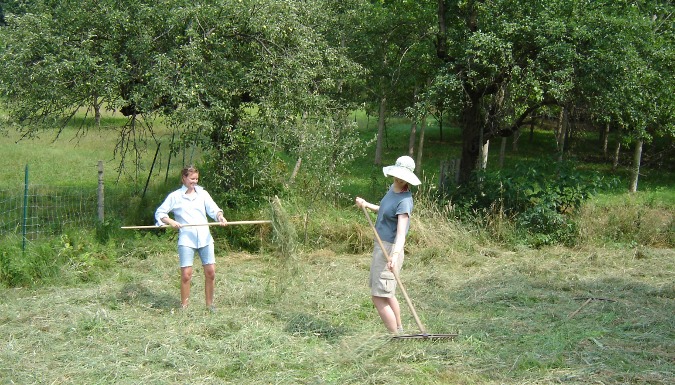
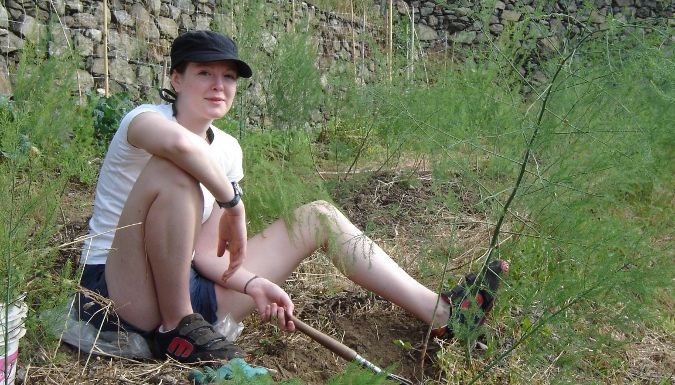
At the end of the night, Silvia informed us of the next day’s tasks: weeding the asparagus beds, picking fruit, and making hay in the afternoon, should the sun be shining.
Our inexperience in all things farm-related had not been a problem since we arrived. There had been a few crossed wires, like when I threw leftovers into the trash instead of adding them to the compost and got told off, but on the whole we found that if you’re willing to learn and don’t have an aversion to dirt, bugs, or early mornings, you’ll get by just fine.
What is WWOOFing
WWOOF is a service that matches people looking for work on farms with farmers who are looking for labor. It’s more a loose affiliation of like-minded groups using the same name than one large international organization.
In order to become a WWOOFer, you need to sign up for the national organization in the country you want. There is no international WWOOF membership, so you’ll have to buy a membership from each WWOOFing country’s organization (WWOOF is made up of almost a hundred organizations). Annual membership usually costs around $10-50 USD per country per person (there is also a joint membership for couples that offers a slight discount). You don’t need any previous experience in farming to do this, just a desire to work.
As you can imagine, WWOOFing opens endless opportunities on an extended-travel trip. If you make your way around the world visiting a selection of the 130 countries and the 12,000 hosts that participate in WWOOF, you can save tens of thousands of dollars over the course of a year.
You can also learn skills, absorb languages, and make friends.
Over our two-month stay, we spent zero on food and accommodation in a region of Italy where it otherwise costs backpackers at least 20 EUR a night for a hostel and 15 EUR a day for food.
Over our two-month stay, that meant a total savings of at least 2,000 EUR!
How to Join WWOOF
We joined WWOOF Italia from a computer in our English dorm room but the process works the same no matter the country you want:
- Visit the WWOOF website.
- Choose your destination country. Here is the list of participating countries.
- Fill out their membership application and pay the fee.
- Start searching for opportunities!
You have to be 18 years of age or older to join most WWOOF destinations, but different rules apply to different countries.
Germany, the UK, Portugal, and Italy take WWOOFers under 18 but you may need a letter of consent from your parent or legal guardian. WWOOF Switzerland has a minimum age of 16 while you have to be 20 years old to WWOOF in Turkey.
Once you’ve filled out the online membership form and paid the fee, you’ll be sent a list of participating farms in your country of choice and can decide which ones to contact.
Each farm description will tell you something about the host, their farm, and their expectations. Read it carefully and ask for accommodation details, examples of work, weekly routine, and food arrangements before you commit. You can also ask whether they have specific house rules and if they’re fluent in English. If they’re not, don’t be put off; this could be a great opportunity to learn a new language!
Be sure to check out the WWOOF Independents section of the site, too, for farms in countries without a central WWOOF body. Join this, and you can visit any of the 1,000+ farms in the WWOOF Independent countries.
How to Choose a Farm
“Farm” is a fairly loose term. Eco-communities, commercial farms, vineyards, and back-garden vegetable plots are all found on WWOOFing list.
Shortly after joining WWOOF Italia, we were sent a list of over a hundred farms. Deciding to spend two months in Italy as part of our gap year, we contacted a couple of farms that sounded appealing, one in the northern region of Piedmont and one in Tuscany, with the intention of staying one month at each.
Some WWOOFers like to spend shorter periods at farms (1-3 weeks) and visit a wider variety of farms. That lets them explore the country while giving them an out in case their farm stay doesn’t go well. Others prefer longer stays so they can really immerse themselves in the region.
If you’re new to both farm work and WWOOFing, I’d suggest a shorter stay so you can get a feel for the lifestyle without having to commit yourself for months.
Additionally, when comparing options, I always check the travel routes and ticket prices to ensure that getting there won’t be too expensive. Volunteers must pay their own transport costs, so if you’re traveling on a budget, ticket prices can have a huge impact on which farms you apply to.
In the case of Silvia’s farm, we found that we could get a flight to Milan with a low-cost airline and then take the train to Asti. Silvia met us there in her beat-up old car. Altogether the journey cost less than 50 EUR.
How to Overcome Problems (F.A.Q.)
What happens if something goes wrong?
I have encountered WWOOF hosts on my travels that I haven’t got on with as well. On the second farm in Italy, we were asked to move a huge pile of firewood that was full of scorpions and had to refuse, then later felt that we were spending too much time weeding flower beds. In this case, you can speak openly to your host and try to find a solution.
If you really don’t like a place and want to leave, you have every right to do so, but volunteers are expected to be respectful of their hosts and give them sufficient notice unless it’s an emergency. In the end, we left the Tuscan farm a week early because the situation didn’t improve, but out of the more than 30 farms I’ve visited across the world, this has never happened again.
If there’s a problem:
- Let your host know. Document the issue if it is something serious, just in case.
- Give them time to fix it.
- If it’s not fixed, tell them you are leaving.
- Give them a week’s notice to be respectful to them and your fellow WWOOFers.
- Remember you are volunteering so you must put your safety and comfort first.
All in all, WWOOF is a cheap way to travel, a great way to learn, and a sure-fire way to have a whole load of adventures.
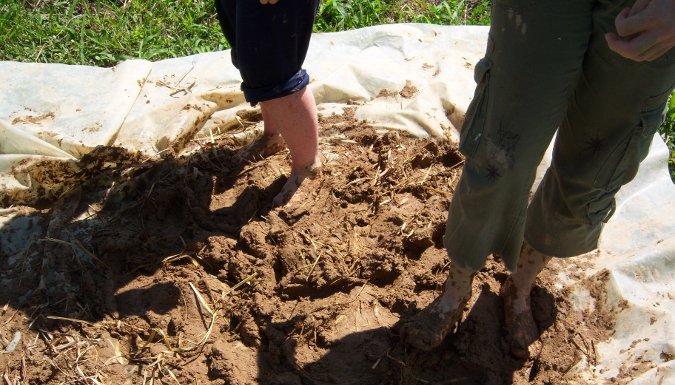
On a farm in Ecuador, there were an incredible amount of fun activities that we could get involved with. Making chocolate, coffee, pasta, and yogurt from scratch were fantastic learning experiences, as was making a cob bench with several of the other volunteers (cob is a natural building material, and feet are the best tools for mixing it!).
Because the farm was also an eco-community and nature reserve, the tasks changed every day and were immensely varied, from studying the native trees to helping install a wind turbine.
If you’re looking for a budget-friendly way to travel the world and learn new skills, try WWOOFing. It’s a fun, challenging, and rewarding way to deepen your travels and make the most of your time abroad!
Sophie McGovern is a travel writer, yarn spinner, and full-time nomad. She is a regular contributor to HeadingThere and has written for a number of popular travel blogs.
Book Your Trip: Logistical Tips and Tricks
Book Your Flight
Find a cheap flight by using Skyscanner. It’s my favorite search engine because it searches websites and airlines around the globe so you always know no stone is being left unturned.
Book Your Accommodation
You can book your hostel with Hostelworld. If you want to stay somewhere other than a hostel, use Booking.com as it consistently returns the cheapest rates for guesthouses and hotels.
Don’t Forget Travel Insurance
Travel insurance will protect you against illness, injury, theft, and cancellations. It’s comprehensive protection in case anything goes wrong. I never go on a trip without it as I’ve had to use it many times in the past. My favorite companies that offer the best service and value are:
- SafetyWing (best for everyone)
- Insure My Trip (for those 70 and over)
- Medjet (for additional evacuation coverage)
Want to Travel for Free?
Travel credit cards allow you to earn points that can be redeemed for free flights and accommodation — all without any extra spending. Check out my guide to picking the right card and my current favorites to get started and see the latest best deals.
Need Help Finding Activities for Your Trip?
Get Your Guide is a huge online marketplace where you can find cool walking tours, fun excursions, skip-the-line tickets, private guides, and more.
Ready to Book Your Trip?
Check out my resource page for the best companies to use when you travel. I list all the ones I use when I travel. They are the best in class and you can’t go wrong using them on your trip.