Countries Visited

    Australia
    Austria
    Bahamas
    Belgium
    Belize
    Bermuda
    Cambodia
    Canada
    Cayman Islands
    Costa Rica
    Czech Republic
    England
    Greece
    Guatemala
    Italy
    Japan
    Laos
    Malaysia
    Mexico
    The Netherlands
    Norway
    Singapore
    Spain
    Thailand
    United States
    The Holy See
    Vietnam

    Travel Goals

    1. Climb to Everest Base Camp.
    2. Climb Mt Kilimanjaro.
    3. Learn to Scuba Dive.
    4. Visit every continent.
    5. See the Galapagos Islands.
    6. Sail down the Amazon River.
    7. Climb Ayer's Rock.
    8. Travel on the Trans-Siberian Railroad.
    9. Go into space.
    10. Throw tomatos at La Tomintina in Spain.
    11. See the sunrise from Mt. Fuji.
    12. Try to figure out the Buddhist messages at Borobudor in Indonesia.
    13. Visit the Pyramids
    14. Safari in East Africa for 3 months.
    15. Go to the World Cup!
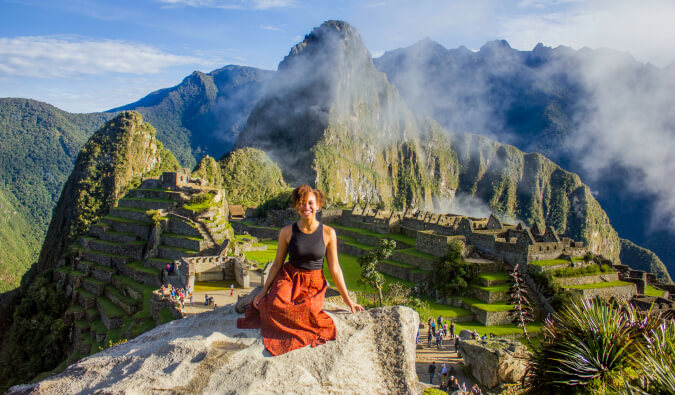
    16. See Macchu Picchu.
    17. Join the Century Club. (100 countries visited)
    18. Join the Mile High Club. (Hey why not?)
    19. Do development work in a 3rd world country.
    20. See Petra Jordan.
    21. Backpack the Eastern Block.
    22. Go back to Alaska and see the Northern Lights.
    23. Vegas Baby! Vegas!
    24. Greek Island hop.
    25. Cycle Tuscany.
    26. Visit India.
    27. Lounge forever in the Seychelles.
    28. See Morocco.
    29. Oktoberfest!
    30. Caravan across the Sahara.
    31. Visit Tibet.
    32. Go to the Cannes Film Festival.
    33. Go to the Sundance Film Festival.
    34. Eat a sushi meal at NOBU
    35. Pacific Island hop.
    36. Spend a night in the Ice Hotel in Sweden.
    37. Go to Israel.
    38. Carnival!!!!
    39. and it's slightly less cool cousin, Mardi Gras!
    40. See Glacier National Park before the glaciers melt.
    41. Fly first class on some long international flight!
    No Service Fees! Promo Code: NOFEE

Interview with Thomas Kohnstamm

August 18, 2008

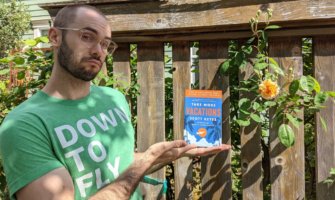
A few months ago, a book came out came out that swept the travel writing world. Do Travel Writers Go to Hell? caused a lot of controversy with its depiction of guidebook writing. Lonely Planet had to issue special statements to reassure users that its books were accurate. Now, with the issue having died down, writer Thomas Kohnstamm reflects on the controversy, guidebooks, and writing.


Nomadic Matt: Your book created a lot of controversy when it came out this year. Did you anticipate such a media firestorm? Did you think there would be such negative reaction to the novel?
Thomas Kohnstamm: I knew that there would be some controversy, but I assumed (perhaps naively) that the conversation would be based on what was actually said in my book. Much of the blow-up was based on speculation, rumors and misquotes. 99% of the people criticizing me and my book had not even seen a copy of the book or read a single page of it.

The controversy dealt with you saying that for the Columbia book, you never went to Columbia. However, you were asked to write the history section of the article, which can really be done from any library. Do you think the media just blew this out of proportion?
Thomas KohnstammThat came from a conversation that I had with an Australian journalist about the issue of “desk updates” in travel writing. I wrote the History, Environment, Food & Drink, and Culture sections of that book – basically the intro of the guidebook. Would my research have benefited from me visiting the country: yes. But the reality is that on many low-budget travel writing projects (i.e countries like Colombia), publishers can only afford to send a couple of the writers into the field. Lonely Planet DID NOT contract me to go to Colombia as there was not enough money in the budget for the book. I did the research based off of memory, notes, interviews with Colombians and research at the Colombian Consulate in San Francisco.

The journalist twisted my words to make them sound as if I had been paid by LP to go to Colombia and I personally determined that the money was insufficient and therefore lazily sat at home and made shit up. The whole newspaper article was written with the intent of being as sensational and scandalous as possible. The article was picked up by some news wires and traveled the globe and blog echo chamber without any deeper thought or evaluation. And all of it was based on a single, faulty story in an Australian tabloid.

Last month, I interviewed a travel writer who said that your book was an inaccurate description of the profession. According to him, a little self discipline, the ability to negotiate a fair contract, and some professionalism will get the job done. What’s your thoughts on this?
Do Travel Writers Go to Hell? is about my experience as a young, wide-eyed travel writer working on my first project. It is not a book about my whole career as a travel writer. Obviously, I learned how to function in the industry much better as I had more projects under my belt.

Many people get into serious financial trouble on their first project or two. If they don’t figure a way to make it work under the tight time and financial constraints, they are simply replaced by another wide-eyed travel writer who will work for little more than a byline and a chance to travel. The potential labor pool is practically limitless.

Also, I received only the highest marks from Lonely Planet on my writing. I may have had some bumps in the road, but I always submitted quality work in the end. I ended up doing a lot more adventurous, cutting-edge research and insightful writing than many of those play-by-the-book earnest writers who spent all of there time visiting the same old hotels down the tourist trail.

Thomas KohnstammI read you once got pistol whipped while on assignment. From that story and your book, it seems guidebook writing is one interesting calamity after another.
I was only pistol whipped once – fortunately. I had a lot of crazy experiences as a travel writer, but I really like to get involved in what is going on in a given place and not just float through as a detached observer. Sometimes I get in over my head.

How did your family and friends react to the book? It’s pretty raw. I bet there were not interested in reading about your drug and sex exploits.
My mom didn’t care for the drinking. My girlfriend didn’t care for the sex. My dad thought it was all great. I purposefully wrote it without feedback from friends and family as I wanted to be able to write about my experiences in an unvarnished, honest way.

It seems like your days as a guidebook writer are over. What are you doing now?
I haven’t written a guidebook in a few years. I am just working on books and screen writing at this point. I hope to continue to do some travel writing, but I prefer the book-length format.

Most writers start out wanting to be a writer- this sort of feel in your lap when Lonely Planet sent you to Brazil. What made you stay a writer and not go back into the business world you left?
I started out wanting to be a writer too – although I was originally most interested in writing about politics. My first guidebook project arrived a little more abruptly than I had anticipated, but in Do Travel Writers Go to Hell? I discuss how I had already written a phrasebook for Lonely Planet years before and had been offered some guidebook writing back in 2000. I had a nascent writing career in my early twenties, but was distracted by a few years spent in academia. When I dropped out of a D Phil program, I accidentally washed up in the business world.

Travel writing has taken you to a lot of places. What’s your favorite country?
That’s hard to say. I love Brazil and will spend Christmas and the New Year there this year. India was one of the most fascinating places that I’ve traveled. I love skiing in France and Chile. I’d like to visit Mozambique and Madasgascar.

After seeing the guidebook world from the inside, do you still recommend people use them?
I still recommend guidebooks and tend to prefer Lonely Planet to the other brands. That said, I would argue that guidebooks are subjective (and somewhat arbitrary) and are not the singular or correct way to approach a destination. People should use guidebooks as a basic tool, but not follow them slavishly. Otherwise guidebooks basically insure that thousands of people all have exactly the same unique travel experience.

Thomas Kohnstamm currently resides in the Pacific Northwest and continues to make waves with his book. If you are interested in reading more, you can purchase the book, Do Travel Writers go to Hell?, here.

Interview with Brook Silva-Braga

July 28, 2008

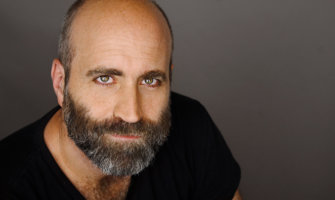
Brook Silva BragaA few weeks ago, I reviewed the movie “A Map for Saturday.” As you know, I loved the movie. I got in contact with the director/star, Brook Silva-Braga, and fresh from his trip in Africa, he was kind of enough to give me an interview.

NM: You took your trip in 2005. What made you decide to video tape it? What kind of reactions did you get on the road?
BSB: Well I had been working at HBO for a while and the only reservation I had about leaving for a year was what it would mean for my career. So bringing the camera was a way to say to myself, ‘See, you aren’t throwing away your career.’ People reacted well to the camera especially once I learned to wait a while before brining it out. It also distinguished me a bit from the rest of the crowd but I think people didn’t really imagine what I was doing would end up in theaters and on TV, I was just a guy with a camera.

In the movie, one of the central themes you hear from travelers is that they didn’t want life to pass them by. I think that’s true with anyone. Why do you think only some people head out on the road while others stay in their office?
Well, I suppose it’s a matter of priorities and background. My parents traveled quite a bit when they were younger and it was always something that was encouraged but not something I prioritized. It was a fluke business trip to Asia that introduced me to the Thai backpacking scene and really planted the seed to take a big trip. If I hadn’t met Bill and Paul on Ko Samui and heard about their RTW trip I probably would still be in an office myself.

I was happy to see you talked about the burnout you can face on the road. Everyone thinks it’s a holiday but sometimes it is work and it wears on you. I experienced it quite a few times during my long haul. Did you get burnt out? How? What did you do about it?
I think people hit a wall, usually about six months in, and I was no exception. I stopped being interested in seeing more temples or churches or city squares. The flip side of that was I became very, very comfortable living on the road. It came to feel like home even though it was a different physical place every few days.

Brook and friendsWhat was the one thing you walked away with from this whole experience?
I think I came away with different ideas about how I want to spend my life and an appreciation for the joys of free time. That perspective can also be a curse for many people who return from long trips and have trouble restarting their lives or careers, often for years after their trip. Even today I struggle to balance my professional and personal ambitions.

What have you been up to since the movie ended? Any new movie in the works? Are you inking major motion picture deals?
I actually just got back from a five month trip through Africa and will spend the summer and fall editing “One Day in Africa,” a documentary following five or six Africans from different backgrounds on one day in their life. There’s a rural farmer, an expecting mother, a college student, etc. I hope to show a side of life in Africa that is more complex than the “look how bad it is” or “look how hopeful it is” variety we tend to see so often.

The movie leaves off in mid-2007 after the Paris premiere. Have you talked to any of the “co-stars” since then?
Yes, I’m still in touch with a lot of them. Sabrina (the German love interest) is coming to New York this fall and Lonnie (the Dane who cuts my hair at the end of the full-length version) is in NYC now and will be crashing on my couch next week. I went to Europe last summer and tried to see as many friends there as possible. It’s really helpful to see people within a year or two, or else that e-mail friendship tends to fade away.

In fact, you talked a lot about how the more time moved forward, the less the e-mails came. With the rise of Facebook, has that changed? Is the five hour friend a thing of the past?Trekking
I don’t think so. I just spent several weeks in Lilongwe, Malawi where I made a number of really good friends. But we haven’t e-mailed or friend-ed each other in the week since I left. I think in the end we probably were ‘Five-hour friends’… we filled a void for each other while we were there and now we’ve gone our own ways. The last time I saw Jens was at the European premiere a year ago but he’s still training to become a pilot for Lufthansa and as I understand it he’ll be doing flight training out in Arizona though I didn’t hear back from my last e-mail to him. Sabrina has moved back to her native Germany after a couple years in Amsterdam, she’s visiting New York and not specifically to see me. I still e-mail Robert, who is a “Five-hour friend” from the movie. He’s married now and living in his native Ireland.

I think that’s true to an extent but Facebook certainly allows you to stay in touch and keep tabs on people easier. In the beginning, I tried to stay in touch with everyone but as you travel you begin to recognize that’s not desirable and get better at picking who’s more than just a “five hour friend.” How has A Map for Saturday changed your life?
Hmm, that’s an interesting question that I don’t think I’ve been asked before. I said before how the trip changed my life by making me appreciate the joys of free time. But it’s been the success of the documentary that has allowed me to stay out of an office the last two years. So I guess A Map for Saturday has changed my life by giving me the freedom to live the life I want to live.

Since not all of us are award winning directors, any advice for those who want to live out of the office?
Well there are a lot of ways to make a living while you’re away, its useful to think a bit more broadly than “travel writer” or “photographer” because everyone wants those jobs and there aren’t many of them. Many of us though have jobs where we can work our butt off for four or five months and then have enough cash to travel on a tight budget the rest of the year.

For more information on the movie “A Map for Saturday” head to Brook’s website where you can see the movie trailer as well as order a copy. Or enter my writing contest and win a free copy!!

If you live in Vancouver, go check out the screening.
Thursday, August 28, 2008, 8 p.m.
Vancity Theatre (1181 Seymour St.)
tickets: Buy Here

Interview with Leif Pettersen

July 13, 2008

Today we talk to Leif Pettersen, travel writer and guidebook author, about traveling, writing, and life as a nomad:

Leif PettersenNomadic Matt: For starters, what gave you the travel bug?

Leif Pettersen: I eased into it. It started with a few trips to visit friends in Mexico in my teens and being shipped off to Norway at 18 for a six week language/culture program. A quarter studying theater and literature in London at 22 is when the bomb really went off. A chance encounter won me a job as a cameraman for a new on-location cooking show. We went to Morocco for six weeks to tape the pilot. I was left on my own while they edited and pitched (and eventually failed to sell) the show during which time I staggered through Spain, France, The Netherlands and Norway yet again. After nine months back in the US working temp jobs and hoarding cash, I did a proper backpacking trip in Europe and I’ve been incurable ever since.

NM: How did you move from intrepid traveler to travel writer?

I’d been fascinated with travel writing ever since a girlfriend in college made me read Fear and Loathing in Las Vegas by Hunter S. Thompson, which still ranks as one of my favorite pieces of travel writing of all time. In my late-20s, I messed around with writing on my own – to this day, I’ve never taken a writing class of any kind - but I’d never been paid to write, unless you count critically acclaimed application user guides for the Federal Reserve Bank System. So, at 33 I sold everything I owned, bought a plane ticket and blundered into the fray. I strongly suspected that I’d return home unpublished and completely broke in a few years, but good fortune and deranged perseverance prevailed and five years later I’m still at it.

NM: You travel to Romania a lot and country seems to be getting a lot of attention lately. Do you think that will ruin it? Are people going to be talking about the “Romania back then” like they do about Thailand?

After decades (centuries in some cases) of some unseen hand leaning on Romania’s ‘pause’ button, change is happening rapidly. EU membership has brought the usual frantic action: infrastructure, roads, utilities, and freakish inflation. Romania has always been pretty effective at ruining itself without any outside help, but the half-assed attempts at EU appeasement (e.g. enforcing laws that cripple the average farmer or outlawing horse-drawn carts on major roads), while clearly back-pedaling on things like high level corruption has been painful to watch. And quite frankly, until very recently, visiting Romania was a resolve-testing pain in the ass, reserved for only the most patient and dedicated backpackers. But Romania is a huge place by European standards and there’s a ridiculous amount of incredible things to see and do, so I don’t believe it’s in immediate danger of being ruined by tourism, a few select sights notwithstanding. For that to happen, they’d have to actually acknowledge tourism as a legitimate industry and give it the proper infrastructure. Bafflingly, Bucharest still lacks any sort of tourism office.

NM: I’m reading the Thomas Kohnstamm book now. He gives the impression that travel writing, at least for guidebooks, is a real hassle- low pay, rushed experiences, superficial reviews. Do you think that’s true?

Not at all. I’ve only felt a sense of urgency on one guidebook job (so far) and that was only because the first author fell ill and I was rushed in to pick up the thread. By the time I got to work, theWriting project was running almost six weeks behind schedule. But some badass heroics on my behalf, careful work delegation with a second author and a deadline extension gave me plenty of research and write-up time in the end.

As for pay, it doesn’t take much time to run the numbers and piece together a fairly accurate estimation of your daily expenses and then tack on what you feel is a fair weekly fee. It’s a simple matter of legwork and reasonable negotiation. In the end, if you can’t come to an agreement over the fee, there’s always the option of saying ‘no.’ Bottom line, act like a professional and you’ll (usually) be treated like a professional.

NM: Most travelers, including myself, use the internet as their main source of information. Do you think the Internet will make paper guidebooks go the way of the dodo?

My very narrow take is that printed guidebooks are king and will probably continue to rule for at least another decade. With the exception of a few rare destination-specific sites, online resources simply can’t compete with the reliability, accuracy, completeness and unbiased reviews (versus broad, user-generated content sites which extravagantly fail at all four). But technology, delivery and consumer preferences are going to drastically affect everything in the very near future. While some travel writers fear the death of printed media (because it’s the best paying gig at the moment), I actually think the digital guidebook evolution will create more opportunities for travel writers that eventually pay just as well. The catch is that this content won’t be nearly as rich in quality until they start to pay a wage that will attract professional writers. But they can’t do that until online revenue streams ramp up and that won’t happen until print revenue makes a major transition to online… it’s a vicious circle. Something has to break eventually.

NM: I’ve had some crazy things happen to me on the road. As someone who travels so often, you must see it all. What’s one story that sticks out above the rest?

You know, perhaps I’m doing it wrong, but I have very few stories that could even be remotely construed as ‘crazy’. But on the subject of crazy, what never ceases to amaze me is how people that can’t even buy a cup of coffee on their own street without mishap manage to get themselves to international destinations (and presumably home) without accidentally killing themselves several times a day. You know who I’m talking about, those people that should have been stopped at the border when they tried to leave their countries and escorted back to whatever half-way house they escaped from. Where do those people come from? It keeps me up at night.

NM: Any chance you will publish your own book?

That’s like asking a crackhead if he intends to score with the $20 he just found. I know I’ve got the chops to write a book (make that several books) that will be so wonderful and witty that you’ll want to smoke a cigarette and change your underwear after every chapter. And with print media’s emphysema getting worse with each passing year, I’m feeling a profound urgency to get started. Unfortunately, I haven’t found any takers just yet. Sadly, the Bill Bryson Days of going somewhere and bemusedly recounting the high jinks you got into are long gone. These days publishers won’t even open your book proposal unless you’ve been a columnist for the New York Times for 15 years or have a killer hook like how you got pistol whipped after taking a dump in the back seat of a cop car while trying to smuggle a panda out of China to protest the occupation of Tibet and global warming. So the onus is on me to dream up the hook, but quite frankly the allure and practical need to take on paying work has kept me far too busy to give it much thought. Perhaps some nice millionaire reading this would like to support me for as long as it takes for the genius concept to ignite?

NM: Everyone dreams of being a travel writer. What advice would you give to new writers who want to start in profession?

The unfortunate fact is that for every travel writer out there that has the true skill to ask for a living wage, there are 25 cliché-addled, alliteration junkies that will work for practically nothing. And for that price, many editors will swallow, and even encourage, that kind of hack work. So, breaking in and making an honest living means nothing short of maniacal dedication. I’m not gonna advise anyone to quit their day job, but it’s almost a necessity. Nights and weekends just aren’t enough, unless your only goal is to see your name in print a couple times a year, which is, admittedly, a nice buzz no matter how jaded you become. Writing every day is vital and traveling a lot only fractionally less so. Find an uncrowded niche, especially in the beginning. In my case, one summer in Romania turned into a Lonely Planet contract, whereas visiting 18 European countries in six months turned into nothing.

If you do decide to quit your day job and jump in the deep end, unless you start off with good contacts, exceptional talent and/or a clue, it’s likely you’ll lose money for at least a year while you build your name, so prepare yourself. Finally, pitch carefully. You’re more likely to get published by spending a full day on a single, well-researched, laser-guided pitch than machine gunning 50 blind, generic pitches in the same amount of time.

Leif Pettersen is currently in Romania working on a guidebook for Lonely Planet. You can find his rantings and ravings as well as his sharp wit on his website, Killing Batteries.