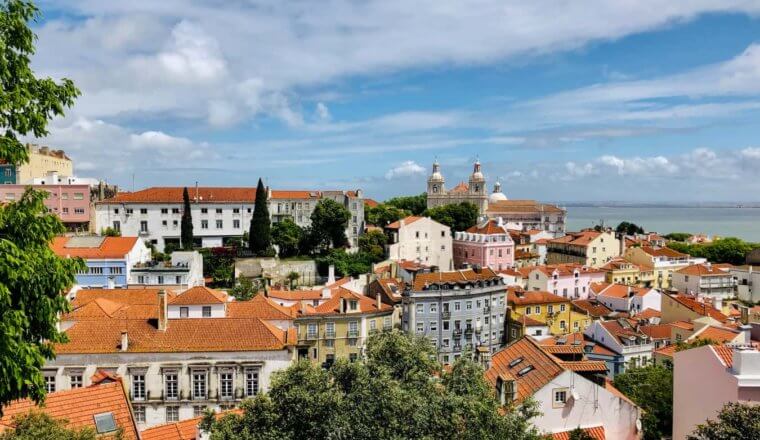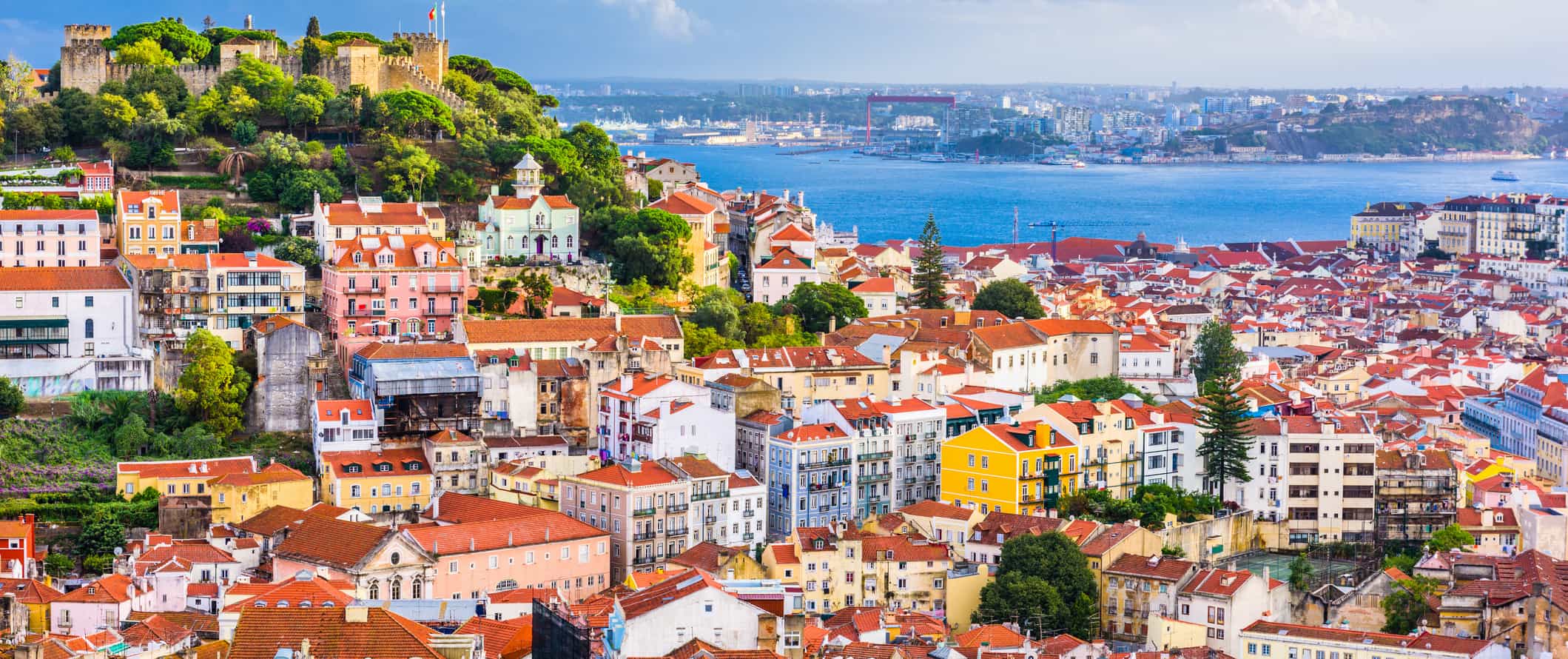
Lisbon, Portugal’s hilly and scenic capital, is one of my favorite cities in the world. The winding streets, ocean views, and flowing wine entice me at every turn. I always love my time here.
Situated along the south of the country’s west coast, Lisbon (Lisboa in Portuguese) boasts an incredible mix of museums, historic buildings, eclectic music, a wild nightlife, charming plazas, and laid-back cafés where you can watch the world go by.
In recent years, Lisbon has become a lot more popular thanks to its inexpensive cost of living and lovely year-round weather. While it’s not the hidden gem it used to be (there’s a growing expat and digital nomad community here now), I don’t think it’s lost its magic — especially if you visit during the shoulder season when the weather is still great and the crowds have thinned out.
This Lisbon travel guide will give you everything you need to plan your trip, save money, and make the most of your time in this underrated European capital!
Table of Contents
Top 5 Things to See and Do in Lisbon
1. Walk around the Old Town
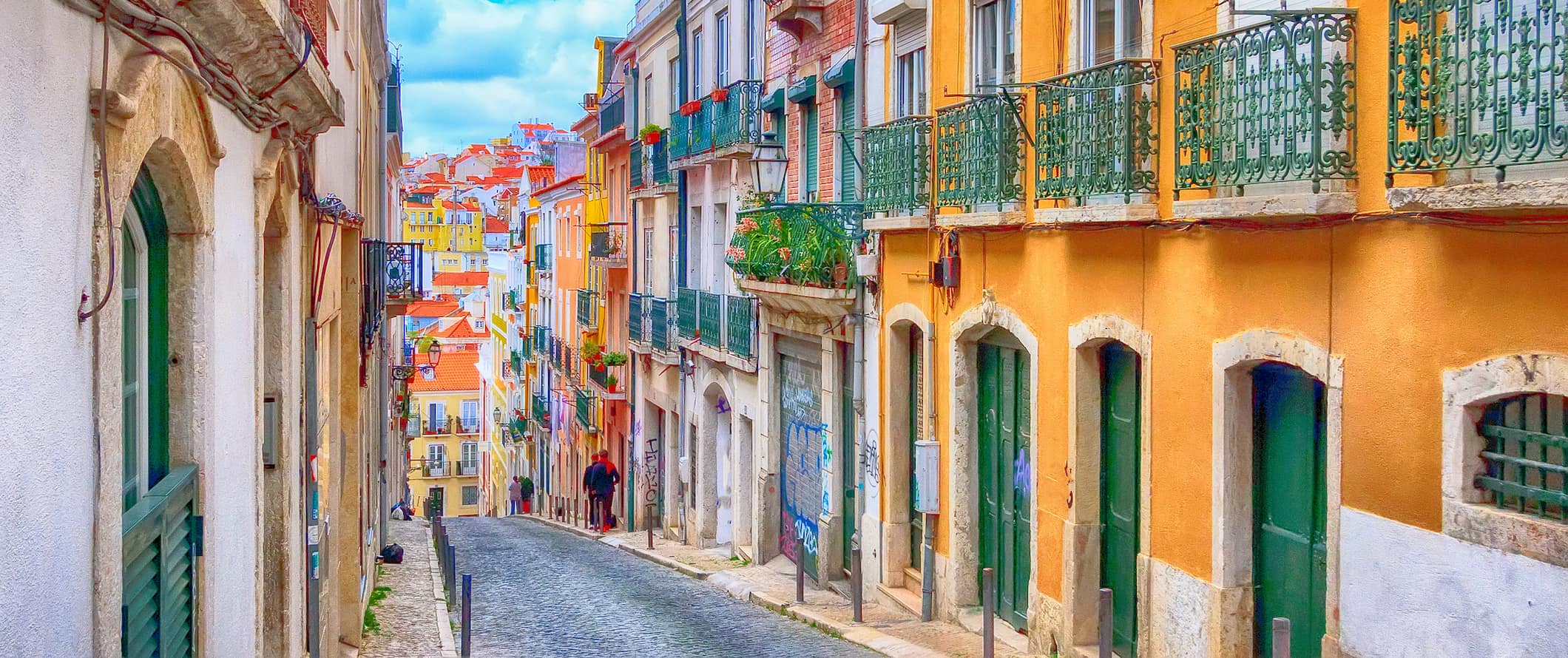
Alfama, the historic area of Lisbon, is filled with narrow, winding streets lined with shops, cafes, and restaurants. The name, meaning “hot springs,” comes from the Moors who conquered here in the 8th century. To learn more about this neighborhood, take a walking tour. Tours last 2.5 hours and are a great intro to the city and its iconic sights.
2. See the Belem Tower
Built in 1515, this tower was used as both a fortress and a lighthouse during the height of Portuguese power in the Age of Discovery. Situated on the northern bank of the Tagus River, the tower stands 30 meters (98 feet) and has 4 stories. It’s been a UNESCO World Heritage Site since 1983 and is open for self-guided tours where you can wander the halls, peek out the various portholes, and visit the pit where prisoners were kept. Admission is 9 EUR.
3. Walk through the Jardim Botanico
This massive 10-acre garden is a haven from the hustle and bustle of the city. Completed in 1873, it’s home to some 18,000 species of plants, including plants from New Zealand, China, Australia, Japan, South America, and more. It’s one of the best green spaces in Lisbon and perfect for relaxing. Admission is 2 EUR.
4. Hit the beaches
Lisbon has several beaches that are perfect for soaking in the city’s beautiful summer weather. Some of the best beaches are Guincho (best swimming area and good waves for surfing), Meco (peaceful atmosphere), Tamariz (easy to reach from the city center; good for kids), and Morena (has a fun vibe). Just be sure to get there early in the summer as the beaches get busy fast!
5. Explore St. George’s Castle
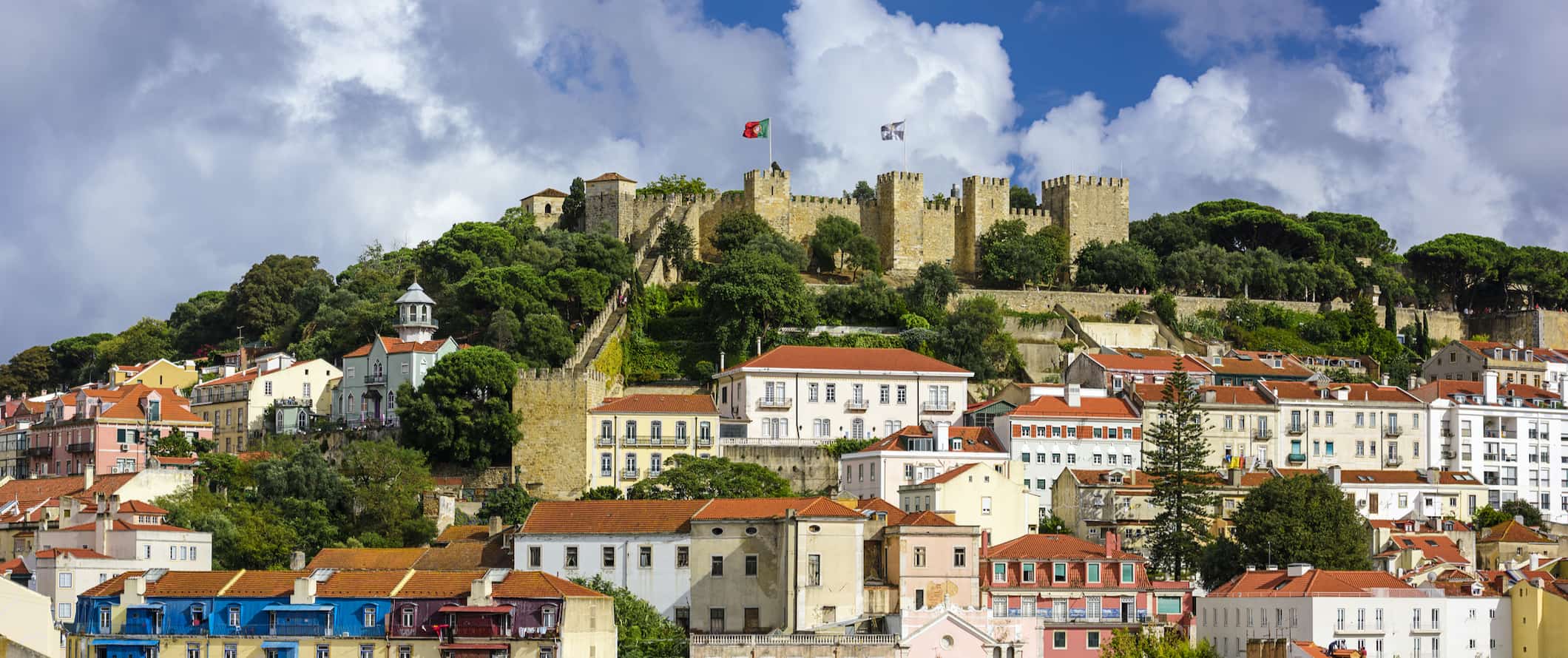
St. George (São Jorge) Castle is a massive medieval castle overlooking Lisbon. Fortifications on the hill date back as far as the 1st century BCE though the current castle dates to the Middle Ages. It was damaged during various earthquakes and more or less abandoned for centuries until the 1930s when it was finally restored and renovated. Today, you can tour the castle and the towers (they offer a beautiful view of the city) and visit the small archeological museum inside. There is also a small garden you can relax in as well as a restaurant. Admission is 10 EUR.
Other Things to See and Do in Lisbon
1. Take a free walking tour
The first thing I do in a new destination is to take a free walking tour. They’re the best way to see the main sights and connect with a local guide who can answer all your questions. New Europe is my go-to free walking tour company as their tours are detailed and their guides know their stuff. They’re the best way to see the city on a budget. Just be sure to tip at the end!
2. See the Berardo Collection Museum
The Berardo Museum of Modern and Contemporary Art has a wide selection of works by Warhol, Picasso, Dali, Duchamp, Bacon, Pollock, and many other masters. Its permanent and temporary exhibits have works representing dozens of modern movements from the past century. While I’m not a huge fan of modern or contemporary art, this is an excellent museum if you are. Admission is 5 EUR and free on Saturdays. Audio guides are 3.5 EUR.
3. Ride the “elevator”
For a sweeping view of Lisbon’s skyline, ride the Elevador de Santa Justa. It’s a century-old elevator located in the city that connects to a 45-meter-tall viewing platform. The elevator was originally steam-powered and offers a gorgeous view of the city. It has a small restaurant at the top where you can eat too. A ride costs 5.15 EUR but you can access the viewpoint (without a ride) for 1.50 EUR.
4. Visit the Praça do Comércio
Commerce Square is Lisbon’s biggest and most popular square. Located along the riverfront, it’s the former location of the royal palace (which was destroyed in a massive earthquake in 1755). Two marble columns from the palace are still standing and the square is now home to lots of small shops. The people-watching here — when accompanied with a book or some refreshing gelato — is excellent.
5. Check out Sé de Lisboa Cathedral
Constructed on the grounds of a former mosque, this Roman Catholic cathedral was built to celebrate the defeat of the Moors in the mid-1100s (a conflict that came about after a failed Crusade to the Holy Land). It’s been partially rebuilt over the years due to earthquakes and is now an amalgamation of Romanesque, Gothic, and Baroque architectural styles. While I’m not a huge fan of 12th-century Romanesque construction, the cathedral was very peaceful and beautiful. Be sure to dress appropriately as it is a place of worship. It’s free to enter.
6. Ride the trams
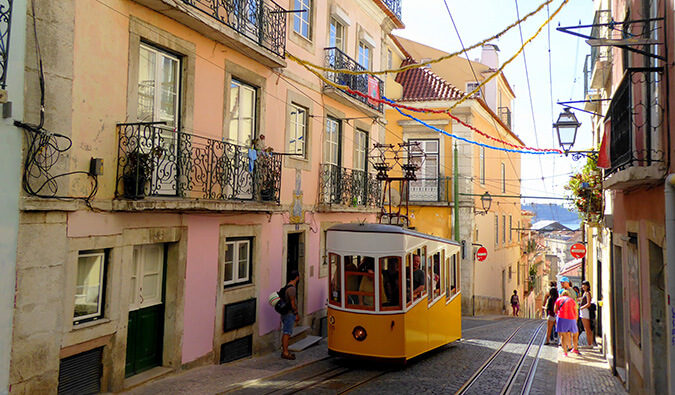
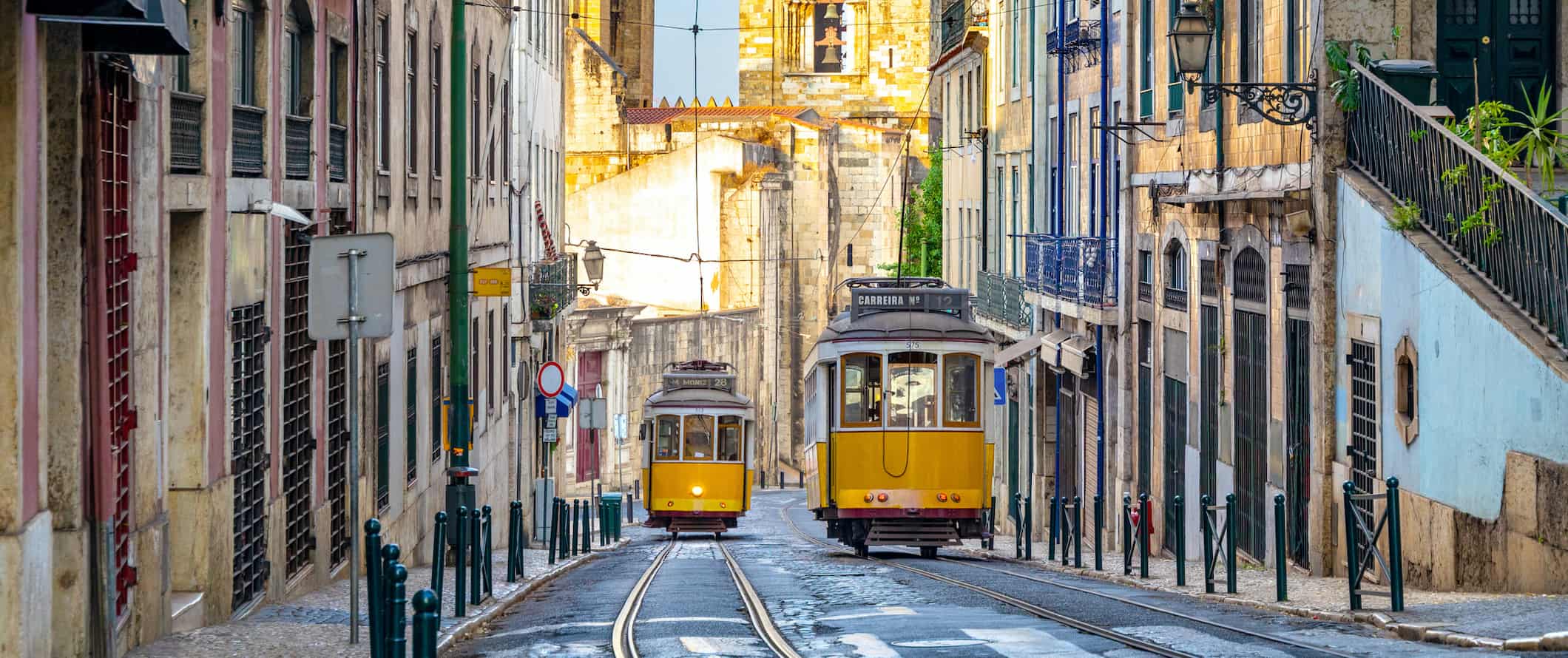
To get a sense of what life in Lisbon was like in the 20th century, hop on one of the yellow “Remodelado” trams. These old-fashioned trams are a fun way to explore the city and see the historic Old Town. While the city also has modern trams, enjoying the charm of the old-fashioned trams is a cheap and easy way to add some character to your visit.
7. See a Fado show
Fado is a local type of music that originated in Lisbon. It’s a rather haunting, mournful style often focused on the hardships of the poor or life at sea. The music first appeared in the 19th century and was popular with the working class (especially sailors). The word “fado” likely stems from the Latin word for fate, which is why many of the songs focus on the inevitability of misfortune and suffering. While melancholic, the music is also beautiful and poetic. To enjoy some traditional fado music, head to Clube de Fado, Tasca do Chico, Parreirinha de Alfama, or Senhor Vinho.
8. Visit the Mosteiro dos Jerónimos
This UNESCO World Heritage Site is a must-see when visiting Portugal’s capital. The monastery took over 100 years to build and was designed in the Manueline style (also known as Late Portuguese Gothic). The monks were primarily involved with helping sailors and mariners who anchored offshore, which is why there are many maritime designs and influences in the architecture. While it is no longer an active monastery, you can still tour the massive buildings and grounds. Admission is 10 EUR.
9. Check out the Discoveries Monument
The Monument to the Discoveries (Padrão dos Descobrimentos) was inaugurated in 1960 during celebrations of the 500-year anniversary of the death of Henry the Navigator (an important figure in the early Portuguese Empire). At 52 meters tall, it depicts Henry holding a small caravel alongside other heroes of Portuguese history. The monument is shaped like a ship’s bow and projects out above the water across the Tagus River. Within the monument is a museum with small historical and cultural exhibitions. On the seventh floor, you can look out to the Atlantic. Admission is 6 EUR.
10. Tour Batalha Monastery
Batalha is a town located just 90 minutes by car from Lisbon. The town is home to Batalha Monastery, officially known as the Monastery of Saint Mary of the Victory. Built in 1388, it’s one of Europe’s greatest Gothic masterpieces and makes for a popular day trip from Lisbon. The monastery took 131 years to build and is now a UNESCO World Heritage Site. Walking through the gigantic gothic doorway and seeing the towering interior (which is lined with 16th-century stained-glass windows) is absolutely breathtaking. Admission is 6 EUR, but you can also purchase a combo ticket to see The Convent of Christ in Tomar and The Abbey of Santa Maria for 15 EUR.
11. Enjoy a pastéis de nata
This delicious custard-filled pastry is a Portuguese staple. You can find them all over the city. They’re traditionally served warm and with cinnamon, paired with a coffee or hot drink. If you’re looking for an authentic experience, check out Pastelaria Versailles. They’ve been around since the 1920s and make some of the best in the city.
12. Take a day trip to Sintra
Lord Byron, writing in the 18th century, said that Sintra was “perhaps in every respect the most delightful [place] in Europe.” If you are visiting Lisbon, be sure to visit Sintra. It’s a wonderful town with cobblestone streets and traditional painted buildings filled with family-run cafes and unique shops. Wander the town on foot and check out the historic town hall, the bustling shopping street of Rua das Padarias, and the church of Igreja de Santa Maria (which dates to the 15th century and is a National Monument). Don’t miss the brightly colored Pena Palace and the Moors Castle. They offer wonderful views of the city. The train from Lisbon takes about 40 minutes and costs less than 5 EUR. If you’d rather take a tour, full-day tours with Tugatrips Tours cost around 65 EUR.
13. Visit MAAT
The Museum of Art, Architecture, and Technology is one of Lisbon’s newest museums. Its mission is to showcase contemporary artists, architects, and thought leaders via traditional exhibits and workshops while also revitalizing the waterfront neighborhood. They have rotating exhibits on music, philosophy, contemporary art, and much more. The building is a massive and futuristic-looking structure located beside an old industrial power plant (which you can also tour). Admission is 9 EUR and there is free admission on the first Sunday of the month.
14. Take a food tour
To learn more about the history and culture behind Lisbon’s cuisine, take a food tour. It’s the best way to eat your way around the city sampling the best eats Lisbon has to offer while learning what makes the cuisine unique. Devour Tours runs in-depth food tours led by expert local guides that will introduce you to the food culture and its history. If you’re a foodie like me who wants to learn more about the history and culture behind each dish, this tour is for you! Tours from 79 EUR.
For more information on other cities in Portugal, check out these guides:
Lisbon Travel Costs
Hostel prices – Prices for a dorm with 6-8 beds start from 20-25 EUR per night. Dorms with 4-6 beds cost cost between 30-40 EUR. Free Wi-Fi and lockers are standard, and most hostels have kitchens too. Many also include free breakfast. For a private room in a hostel, expect to pay 65-100 EUR per night.
For those traveling with a tent, camping is available outside of the city. A basic plot for one person without electricity starts at 12 EUR in the off-season and 20 EUR in the summer.
Budget hotel prices – Two-star budget hotels start around 65-85 EUR per night. Expect basic amenities like free Wi-Fi, TV, and coffee/tea makers.
Airbnb is also available around Lisbon, with prices for an entire apartment starting at 70 EUR per night (but averaging more than double that). Private rooms start around 30 EUR but average closer to 70 EUR.
Food – Fish and seafood form the backbone of Portuguese cuisine (Portugal eats the most seafood per capita in Europe). Cod, sardinhas assadas (grilled sardines), sea bass, and shellfish are some of the most common staples. Other popular dishes include cozido à portuguesa (boiled stew), peixinhos da horta (breaded and fried vegetables), and cured ham. Be sure to also try the prego (beef sandwich) or the bifana (pork sandwich). You can find them at local cafes for just 5 EUR.
If you want a traditional meal with drinks at a casual restaurant, you’re looking at spending around 20-25 EUR (prices are higher in the touristy downtown area). Outside downtown, there are many local places where you can find meals for around 10-15 EUR.
A basic fast-food meal (think McDonald’s) costs around 7 EUR while a large pizza starts around 12 EUR. Chinese food costs 10-15 EUR for a main dish.
Beer is around 3 EUR while a latte/cappuccino costs around 2 EUR. Bottled water is less than 1 EUR.
For a week’s worth of groceries, expect to pay 35-45 EUR. That includes basic staples like pasta, vegetables, fruit, bread, cheese, and some meat or fish.
Backpacking Lisbon Suggested Budgets
On a backpacker budget, you can visit Lisbon for around 50 EUR per day. On this budget, you’ll be staying in a hostel dorm room, cooking all of your meals, limiting your drinking, using public transportation to get around, and sticking to free activities like free walking tours, enjoying the beaches, and exploring the Old Town. If you plan on drinking, add 5-15 EUR per day to your budget.
On a mid-range budget of 130 EUR per day, you can stay in a private Airbnb or private hostel room, eat at cheap local restaurants and cook some meals, use public transportation and take the occasional taxi, visit paid attractions like the botanic gardens and Belem Tower, and enjoy some drinks at the bar.
On a “luxury” budget of 240 EUR or more a day, you can stay in a hotel, eat out for every meal, drink what you want, rent a car to explore the region, and visit as many museums and attractions as you’d like. This is just the ground floor for luxury though — you can easily spend more if you really want to splash out!
Lisbon Travel Guide: Money-Saving Tips
Lisbon is the most expensive city in the country — but it’s still quite affordable compared to other European capitals. It’s hard to spend a ton here unless you are splashing out. If you find cheap accommodation, cook most of your meals, and stick to mostly free activities, you’re going to be able to keep your budget intact. Here are some quick tips to help you save money in Lisbon:
- Pick up a Lisbon Card – If you’re planning to visit lots of attractions, get the Lisbon Card. It offers free or discounted entry to several attractions as well as unlimited public transportation. Prices start at 21 EUR for a 24-hour card and there is also a 48-hour card for 35 EUR and a 72-hour card for 44 EUR.
- Get a bus pass – If you don’t get the Lisbon Card but still plan on using a lot of public transportation, buy a day pass. They are just 6.45 EUR and will save you a lot of money if you’re using public transportation often.
- Cook your own meals – Restaurants are affordable here, but eating out all the time can still be costly. If you’re on a tight budget, save yourself some money by cooking your own meals.
- Take a free walking tour – If you want to understand more about the history, architecture, and culture of Lisbon then take a free walking tour. They usually last a couple of hours and are a great introduction to the city. Just be sure to tip your tour guide at the end!
- Stay with a local – Couchsurfing is the best way to save on accommodation in Lisbon. By staying with a local you’ll not only save money but you’ll get to spend time with someone who can show you the city’s hidden gems and teach you more about the culture and history of Lisbon. Just be sure to send your requests early in the summer!
- Skip the taxis – Taxis are expensive, often adding fees for luggage and airport pickups. Simply use the metro or bus to get where you need to. You’ll save a ton.
- Say “no” to bread – When eating out, you’ll often be offered bread and olives. They will be brought to your table before your meal. These aren’t free, so politely decline the offer if you’re not interested in paying for them.
- Use BlaBlaCar – BlaBlaCar is a ridesharing app you can use to travel in between cities. It’s faster than the bus and usually just as cheap. You’ll have to find a ride, which can sometimes be hit or miss, but the profiles are verified and reviewed so it’s quite safe. Plus, it’s a great way to connect with other locals/travelers.
- Visit the Berardo Collection Museum on Saturdays – Tourists can get a glimpse of Portuguese businessman Jose Berardo’s personal collection of contemporary art, which makes up the permanent exhibits at the museum. Even if you aren’t a fan of contemporary art, the building itself is great to walk through. The museum is free on Saturdays.
- Bring a water bottle – The tap water here is safe to drink so bring a reusable water bottle to save money and reduce your plastic use. LifeStraw is my go-to brand as their bottles have built-in filters to ensure your water is always clean and safe.
Where to Stay in Lisbon
Lisbon has lots of hostels. In fact, it’s one of the best cities in the world for hostels. Here are my suggested places to stay in Lisbon:
For more hostel suggestions be sure to check out my list of the best hostels in Lisbon!
How to Get Around Lisbon
Public transportation – Buses are the most common way to get around the city. The buses in Lisbon are clean and efficient. Tickets cost 1.50 EUR for a single ride or 1.35 EUR with a pre-paid card. You can get a 24-hour pass for 6.45 EUR that you can use on the bus, subway, and tram.
There are two tram lines in the city: the modern Siemens “Articulado” trams and the historic “Remodelado” trams. Trams cost 1.50 EUR.
The metro offers a fast way to get from one corner of the city to another. There are four lines and 56 stations. They are very accessible and the information and maps are provided in English so it’s easy to navigate. Prices are the same as the tram and bus.
Taxi – Taxis in Lisbon start at 3.50 EUR and increase 0.50 EUR for every kilometer traveled. Most drivers speak English but showing them the address on your smartphone will help. If you’re on a budget, skip the taxis. They get expensive fast!
Ridesharing – Uber is available in Lisbon but it’s not much cheaper than the taxis. Bolt and FreeNow are two other ridesharing apps that are usually cheaper than Uber, but I’d still skip ridesharing altogether if you’re on a budget.
Bike rental – If you’re an avid cyclist who likes a challenge, then biking in Lisbon can be fun. For the non-cyclist, it will likely be unpleasant. The city is filled with steep hills and cobblestone streets — hardly ideal for a leisurely ride. Bike rentals start at 10 EUR for a half-day and go up to 25 EUR for a full day. You can also try Gira, the city’s bike-sharing system (you can buy a 24-hour pass for just 2 EUR).
Car rental – You won’t need to rent a car to get around the city as public transportation is reliable and efficient. If you plan to go on a day trip, you can rent a car to have more flexibility. It will be more expensive than taking the bus or train but will give you more freedom. Expect to pay 30-40 EUR per day for a small rental car. Drivers need to be at least 21 years old.
For the best rental car deals, use Discover Cars
When to Go to Lisbon
Peak season in Lisbon is during the summer months of June-August. Temperatures during that time soar to 25-30°C (77-86°F). This is also the busiest time to visit the city so expect crowds and slightly higher prices. The overall atmosphere during this time is lively and there are lots of places to swim or relax on the beach so it’s still worth visiting during peak season.
If you’re on a budget, the best time to visit Lisbon is during the shoulder season. April-May and September-October are still warm so you can enjoy the outdoors without as many crowds. Temperatures hover between 12-25°C (53-77°F) during these months. It may be a bit rainy, but you can still enjoy the city without much inconvenience.
Winter is from November to February. It gets cold, and tourist crowds thin out considerably. Temperatures vary but hover around 10°C (50°F). It’s still warmer than much of Europe, so if you’re on the continent and are looking to avoid the worst of the weather, head to Lisbon (or even further south to Faro).
How to Stay Safe in Lisbon
Lisbon is very safe for travelers — including solo female travelers. Violent attacks here are uncommon and petty crime is rare. Pickpocketing is the most common crime so just be aware of your surroundings when you’re in busy markets or when using public transportation and always keep your valuables secure and out of reach.
Young backpackers may be approached and offered drugs as Portugal has decriminalized drug use. However, selling drugs is not legal and there are still consequences so simply decline the offer politely but firmly and continue on.
You won’t find a lot of travel scams in the city but read this article on common travel scams to avoid if you’re worried about getting ripped off.
Solo female travelers should generally feel safe here, however, the standard precautions apply (always keep an eye on your drink when at the bar, never walk home alone intoxicated, etc.).
The emergency number in Lisbon is 112.
The most important piece of advice I can offer is to purchase good travel insurance. Travel insurance will protect you against illness, injury, theft, and cancellations. It’s comprehensive protection in case anything goes wrong. I never go on a trip without it as I’ve had to use it many times in the past. You can use the widget below to find the policy right for you:
Lisbon Travel Guide: The Best Booking Resources
These are my favorite companies to use when I travel. They consistently have the best deals, offer world-class customer service and great value, and overall, are better than their competitors. They are the companies I use the most and are always the starting point in my search for travel deals.
- Skyscanner – Skyscanner is my favorite flight search engine. They search small websites and budget airlines that larger search sites tend to miss. They are hands down the number one place to start.
- Hostelworld – This is the best hostel accommodation site out there with the largest inventory, best search interface, and widest availability.
- Booking.com – The best all around booking site that constantly provides the cheapest and lowest rates. They have the widest selection of budget accommodation. In all my tests, they’ve always had the cheapest rates out of all the booking websites.
- HostelPass – This new card gives you up to 20% off hostels throughout Europe. It’s a great way to save money. They’re constantly adding new hostels too. I’ve always wanted something like this and glad it finallt exists.
- Get Your Guide – Get Your Guide is a huge online marketplace for tours and excursions. They have tons of tour options available in cities all around the world, including everything from cooking classes, walking tours, street art lessons, and more!
- The Man in Seat 61 – This website is the ultimate guide to train travel anywhere in the world. They have the most comprehensive information on routes, times, prices, and train conditions. If you are planning a long train journey or some epic train trip, consult this site.
- Trainline – When you’re ready to book your train tickets, use this site. It streamlines the process of booking trains around Europe.
- Rome2Rio – This website allows you to see how to get from point A to point B the best and cheapest way possible. It will give you all the bus, train, plane, or boat routes that can get you there as well as how much they cost.
- FlixBus – Flixbus has routes between 20 European countries with prices starting as low 5 EUR! Their buses include WiFi, electrical outlets, a free checked bag.
- SafetyWing – Safety Wing offers convenient and affordable plans tailored to digital nomads and long-term travelers. They have cheap monthly plans, great customer service, and an easy-to-use claims process that makes it perfect for those on the road.
- LifeStraw – My go-to company for reusable water bottles with built-in filters so you can ensure your drinking water is always clean and safe.
- Unbound Merino – They make lightweight, durable, easy-to-clean travel clothing.
- Top Travel Credit Cards – Points are the best way to cut down travel expenses. Here’s my favorite point earning credit cards so you can get free travel!
- BlaBlaCar – BlaBlaCar is a ridesharing website that lets you share rides with vetted local drivers by pitching in for gas. You simply request a seat, they approve, and off you go! It’s a cheaper and more interesting way to travel than by bus or train!
Lisbon Travel Guide: Related Articles
Want more info? Check out all the articles I’ve written on backpacking/traveling Portugal and continue planning your trip: