Last Updated: 3/17/23 | March 17th, 2023
I love to eat.
In fact, eating is one of my favorite activities, and also one of my favorite aspects of traveling.
Food is such an integral part of so many cultures that to skip out on meals when you travel is to miss out on a part of that culture.
I’m always disappointed when I meet travelers who cook all their meals in a hostel kitchen.
Why come to Italy and not have pasta?
No sushi in Japan?
Avoiding steak in Argentina?
Skipping paella in Spain?
While you don’t need to eat every single dish when you visit a new country, it’s important to be as open as possible to their food culture.
Of course, many travelers have a valid concern when it comes to food. For one, eating out all the time is expensive. Imagine if you ate out every day — your food budget would be astronomical!
Additionally, many people have dietary concerns that prevent them from fully embracing new foods. And many travelers are vegan or vegetarian, as well, which might impact their options.
As a backpacker, people often assume that I, like other backpackers, cook all my meals.
However, I don’t actually cook very often when I’m on the road. While I love cooking at home, I hate poorly equipped hostel kitchens.
To make sure I can eat out without breaking the bank, I have had to learn how to balance eating 99% of my meals out while still finding a way to save money.
Yes, it takes a bit of clever thinking, but it definitely is possible. Here’s how to eat out on a budget while you travel the world:
Table of Contents
- 1. Eat at Buffets
- 2. Visit Outdoor Street Vendors
- 3. Eat Street Food
- 4. (Sometimes) Eat Fast Food
- 5. Go Local
- 6. Find the Lunch Specials
- 7. Skip the Soda
- 8. Refillable Water Bottle
- 9. Don’t Snack
- 10. Cook Often
- 11. Picnic
- 12. Use Tourism Cards
- 13. Find Free Breakfast
- 14. Eat With Students
- 15. Use Supermarket Deals
1. Eat at Buffets
While they don’t always serve the best meals, buffets offer great value for your money, especially since they are all-you-can-eat. More often than not, you can fill up on one meal for the entire day. They are a good economical choice and give you the most food for your buck (while allowing you to sample a lot of different foods).
2. Visit Outdoor Street Vendors
Small stands that sell hot dogs, sausages, sandwiches, and similar foods great places to get a cheap and quick meal. While in Sweden, I lived off these types of vendors. While they are nothing fancy, they are tasty and cheap!
In Amsterdam, FEBO and their croquettes kept my stomach full. In Costa Rica, the empanada seller filled me up for a dollar and I bought local food from vendors at markets for mere pennies in Madagascar.
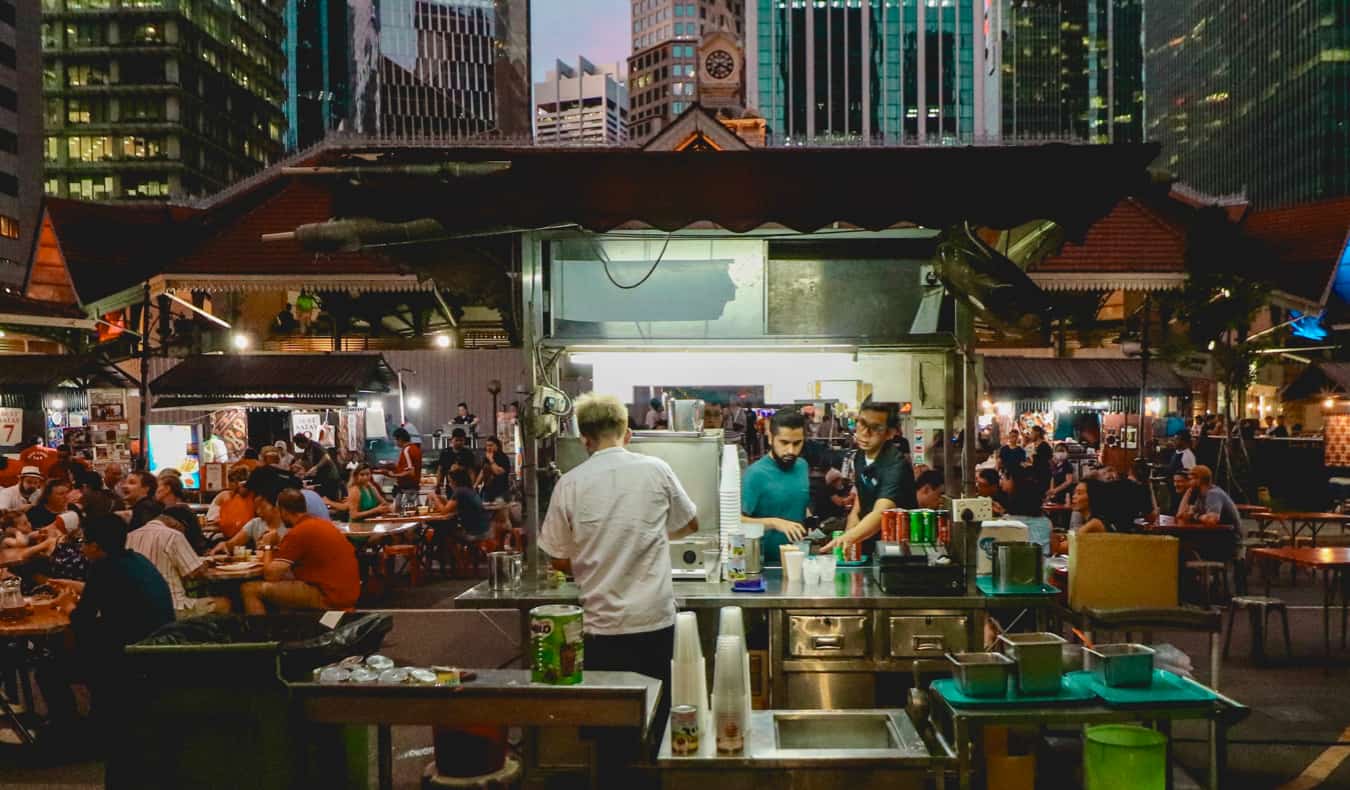
These quick and inexpensive meals won’t win any Michelin stars (though there are Michelin star food stalls in Singapore!) but, they will keep you full without emptying your wallet.
3. Eat Street Food
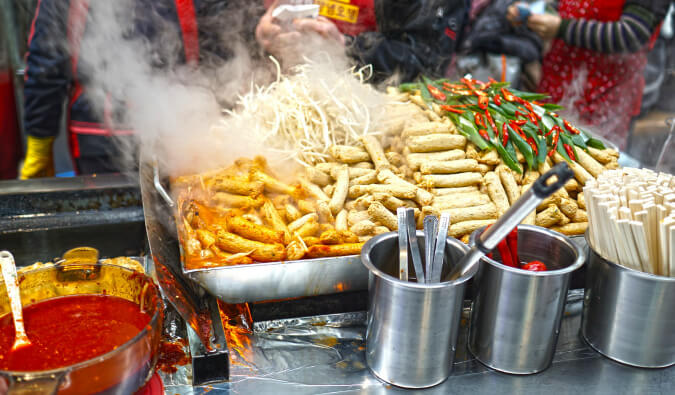
In most places around the world (and especially in Asia), the streets are lined with little food stalls and areas where food is cooked openly on the street.
You grab a plate, sit down in a little plastic chair, and enjoy a delicious meal. Street food is some of the best food in the world. Meals at street stalls (different from street vendors, who have a bit more permanent set-up) cost less than a dollar most of the time and are a great way to really experience the local cuisine.
Many places — like Thailand and Vietnam, for example, wouldn’t be the same if the street food disappeared.
4. (Sometimes) Eat Fast Food
Fast food isn’t the best for you, but it is another option if you want a cheap meal in inexpensive parts of the world. For as little as $5 USD (more in expensive countries like Norway, home of the $15 Whopper), you can get a filling (and hugely caloric) meal.
Moreover, the local dollar menu will save you even more. Sure, it’s not the greatest food, and I am going to skip the philosophical debate about traveling around the world only to eat McDonald’s to say that it’s cheap and just another way to help you rein in your spending. (However, note: in Asia, fast food is often more expensive than local food.)
5. Go Local
When you’ve been traveling for a while, it’s only normal to crave a taste of home every now and then. That means that sure, sometimes I get sick of Greek food when I’ve been traveling there for a bit. Other times, I can’t eat any more Thai food and just want a burger.
And that’s OK.
We live in a globalized world — eat what you want. However, non-local food is almost always more expensive than local cuisine. For example, in Vietnam, a bowl of pho is less than a dollar, but a burger is about three times as much (or more!).
Go local and you will save yourself a ton of money in the long run!
6. Find the Lunch Specials
Many restaurants, especially in Europe, offer lunch specials, where items on the dinner menu are offered at a huge discount. You can get an amazing afternoon meal for a fraction of the cost you’d pay for the same meal in the evening.
I usually tend to eat my “nice” meal during lunch, because lunch specials and plates of the day are about 30-40% off what I might pay at dinner. The options will usually be more limited, but the savings more than justify it.
7. Skip the Soda
Grabbing a refreshing can of Coke or Pepsi might seem like an inexpensive way to quench your thirst, but it’s a choice that adds up (much like buying a coffee every day). Sure, I may splurge once in a while on a Coke, but I hardly ever buy soda because it is so expensive (and it’s so bad for you!).
When you’re visiting a tropical location, an ice-cold soda is definitely appealing. But spending a couple of bucks every day can really add up over the course of a long-term trip!
8. Refillable Water Bottle
Water might not be as expensive as soda, but buying a bottle (or three) every day can add up. As you walk around and sightsee, you need to stay hydrated. But buying a bottle of water is not only environmentally wasteful — it also makes foolish budget travel sense.
Assuming each bottle is about $.75 USD and you buy three a day, over the course of a month you will spend $67.50!
That’s a lot of money spent on water! (Plus, in some parts of the world, bottled water costs a lot more than that!)
Carry a refillable bottle of water (with a filter) with you instead and just use the tap water. I suggest a Lifestraw bottle. It ensures your water is always clean and safe.
9. Don’t Snack
A gelato here, a gelato there. A soda. A candy bar. An ice cream. A small pastry. It all adds up.
Since the price is so small (“It’s only a euro!”), we don’t think of snacking as having a big impact on our budget. But buying snacks a few times a day adds up. Even if you just buy two little snacks for 1.50 EUR per day, that’s going to be at least 90 EUR (over $100 USD!) by the end of the month.
It’s not something many travelers think of, but snacking really does add up over the long term. Avoid snacks and stick to big, filling meals instead. If you do need to snack, make sure you account for it in your budget.
If you’re someone who loves snacking throughout the day, consider buying snacks at the supermarket like fruits, crackers, energy bars, etc., to take with you to munch on over the course of the day so you’re prepared instead of splurging on an overpriced tourist trap snack.
10. Cook Often
I don’t cook a lot on the road as I don’t like hostel kitchens. They never have everything I need, and I hate traveling with a portable kitchen so I can have all the ingredients I want.
Yet when I am in one place for a while (or if I’m Couchsurfing), I cook a few meals.
Cooking is one of the best ways to keep your travel costs down, and supermarkets are also great places to go to see what the local people eat. The only place where cooking your own meals isn’t the most economical option is Asia, where street food is usually cheaper.
As I mentioned, I’ll often go out for a nicer meal at lunch when I can find a good deal. That will usually mean for dinner I’ll be cooking my own food. That way, I’ll still get to try the local cuisine but I’ll also get to keep my budget intact. Double win!
11. Picnic
Another good self-cook method is to picnic. This is something I do a lot for lunch if I’m somewhere where the weather is nice. I usually head to a local food market, pick up a bunch of food, and go picnic in the park. Not only am I saving money (sandwiches aren’t expensive), but it affords me a good chance to watch the locals scurry about their daily lives.
If you’re staying at a hostel, this is a great ice-breaker for meeting new people. Just invite everyone along to join you and you’ll be making new friends in no time!
12. Use Tourism Cards
Most people think of tourist cards like the iAmsterdam card or the VisitOslo pass as just a way to save money on transportation and attractions. But these cards also offer discounts at many restaurants. Typically, discounts are around 15-25%, but sometimes lunch specials can be up to 50% off.
Visit the local tourism office when you arrive and ask what food discounts are included. Chances are you’ll be able to save even more money if you just take the time to learn about the tourism pass. it’s a worthwhile investment!
13. Find Free Breakfast
If you can find hostels or hotels that include breakfast, you’ve already eliminated the cost of one meal. Plus, if you have a huge breakfast that fills you up for most of the day then you don’t need to eat as many meals out. Moreover, many hostels around the world also offer free dinners, free coffee and tea, and other food-related perks. Search them out to save money and lower your food costs.
14. Eat With Students
Where there are universities, there are students, and since students are usually broke, that means there are likely cheap places to eat nearby. Check Google Maps for local post-secondary institutions and see what you can find in the nearby area. Many bars in the area will likely have cheap drinks and happy hours too, so you can save even more.
15. Use Supermarket Deals
In many countries, supermarkets offer lunchtime specials for workers in the surrounding areas. These usually entail fresh sandwiches or some soup or salads. Additionally, many supermarkets also discount food that expires soon, including bread, baked goods, meat, and produce. Buy groceries in the evening and you can likely find yourself some discounted (but still totally safe and edible) food.
I love a nice restaurants. I don’t mind paying money for a good meal with a nice glass of wine. But doing that EVERY meal is simply too expensive.
But, by using the tips above, I can afford to keep my costs down while still being able to afford a quality meal every so often.
And that’s what is really important — finding the right balance.
Because if you can manage to balance eating great food with saving money, both your wallet and your stomach will thank you.
Book Your Trip: Logistical Tips and Tricks
Book Your Flight
Find a cheap flight by using Skyscanner. It’s my favorite search engine because it searches websites and airlines around the globe so you always know no stone is being left unturned.
Book Your Accommodation
You can book your hostel with Hostelworld. If you want to stay somewhere other than a hostel, use Booking.com as it consistently returns the cheapest rates for guesthouses and hotels.
Don’t Forget Travel Insurance
Travel insurance will protect you against illness, injury, theft, and cancellations. It’s comprehensive protection in case anything goes wrong. I never go on a trip without it as I’ve had to use it many times in the past. My favorite companies that offer the best service and value are:
- SafetyWing (best for everyone)
- Insure My Trip (for those 70 and over)
- Medjet (for additional evacuation coverage)
Want to Travel for Free?
Travel credit cards allow you to earn points that can be redeemed for free flights and accommodation — all without any extra spending. Check out my guide to picking the right card and my current favorites to get started and see the latest best deals.
Need Help Finding Activities for Your Trip?
Get Your Guide is a huge online marketplace where you can find cool walking tours, fun excursions, skip-the-line tickets, private guides, and more.
Ready to Book Your Trip?
Check out my resource page for the best companies to use when you travel. I list all the ones I use when I travel. They are the best in class and you can’t go wrong using them on your trip.