


Alternatives to Guidebooks
By NomadicMatt | Published: July 30, 2008
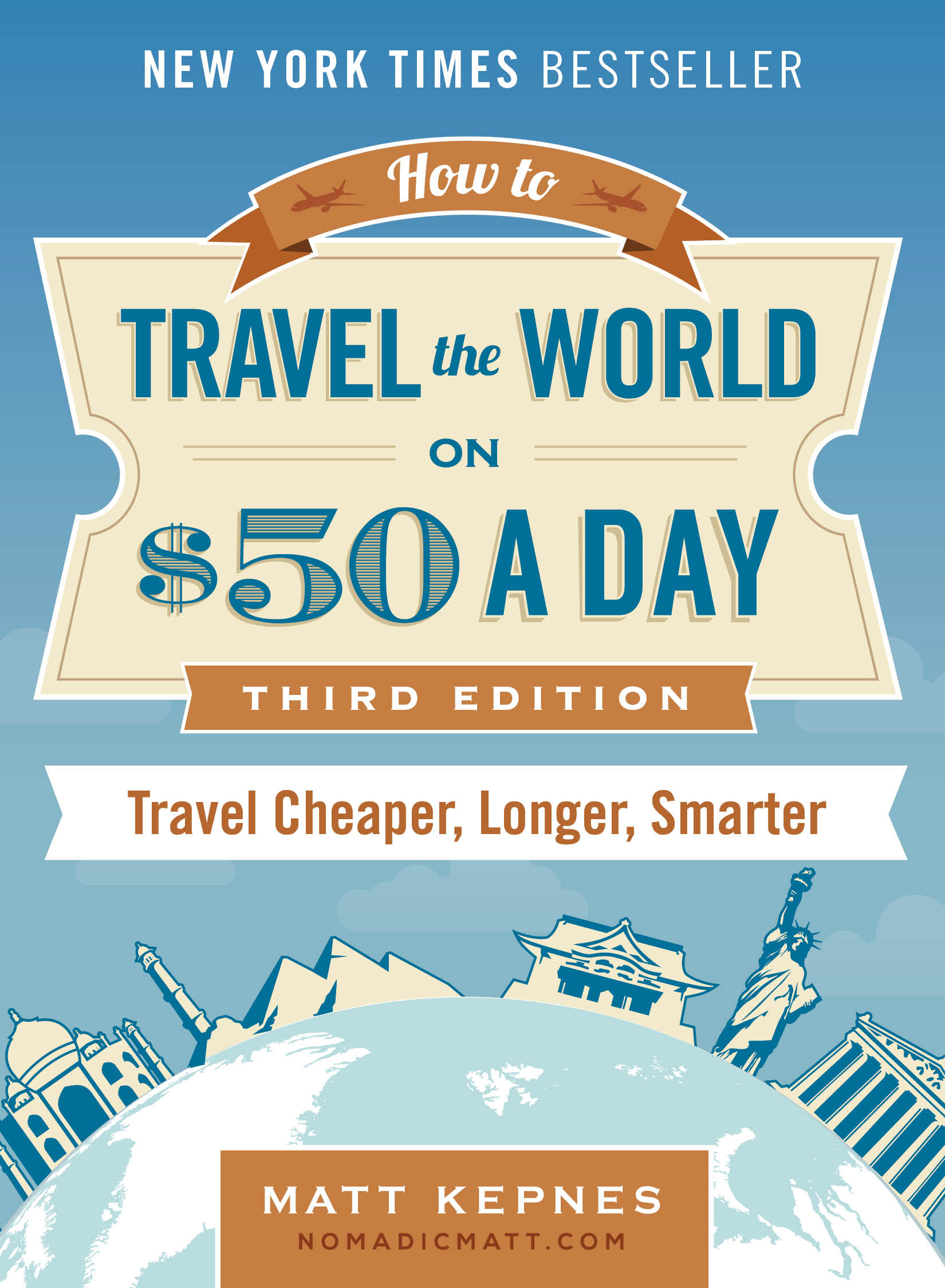
Sometimes, guidebooks just don’t provide all the information a traveler needs. Information can be vague and outdated. By the time the information gets to you, it is at least a year old. Moreover, those large multi-country guides just don’t have the depth of information you need many times. I keep a guidebook with me when I travel as a reference guide so I can look up information or see a map but for the most part, I get my travel information from other places on the internet.
There are many good alternatives available out there for travelers to get up-to-date information from:
Online Message Boards – Online travel communities like Matador Trips, Lonely Planet’s Thorn Tree, Eurotrip, and Boot’s N All are good alternatives to guidebooks and maintain robust message boards. You can post messages and get responses from other travelers and experts. The most robust of these boards is Lonely Planet’s Thorntree. The information on all of these will be much more up-to-date and more specific to your needs than anything you’d find in a guidebook. Active members and regular postings ensure that people correct misinformation. You’ll be able to get a general consensus on your questions (I recently used them to figure out some of the finer points of the European Schengen Visa zone). Added bonus: each board has a meet up section so you can find a traveler partner or two if you need one!
Travel Blogs – Get it straight from the horse’s mouth! Other travelers are a great resource for information. You can view their photos, ask questions, interact with their community, and read stories from their past trips. There are so many travel bloggers these days that you can get information on anywhere in the world from someone who lives there or has been there recently. I usually always read some blogs about what to see, do, or expect when I’m planning a trip. You never know what travel gem or experience someone has found out that might appeal to you. Check out my travel blog links section for more.
Citysearch/Yelp! – Online city and restaurant guides can help you find the best things to see and do in a town. These sites are contributed to by the locals. You can find out what’s hot in town, and what events and activities are going on from the people that know the area best. I like to use this a lot to get advice on places to eat. I find the selection in guidebooks pretty limited and food changes so much that what is good when they printed the guide book, might not be good today.
Hostel booking sites – Sites like Hostelworld, Hostelbookers, and Hostelz will have much more accurate, up-to-date, and in-depth guides to hostels around the world than guidebooks. Moreover, you can read traveler reviews of all the hostels to see how good they still are. Hostels are also rated by a number of metrics on these sites, so you can find out what’s good right now, not what was good last year. This is a much better resource for finding accommodation than a guidebook section. Hostels and quality change too quickly.
Twitter – Twitter is actually a great source for information. Not only can you use the search feature to find people talking about the place you are going, there are thousands of travel experts on the site (including me!) who you can ask questions to. Moreover, using the hashtags #travel or #tbex will usually get your question answered in a relatively short time, even if you don’t have any followers. People will see your question and help.
Travelers – Travelers are the BEST resource you have. They are right on the road with you. They’ll give you the most accurate information, because they’re just coming from where you are going. Wherever you go, always ask as much as you can from other travelers. One helpful traveler is worth a million guidebooks. Before I use any of the above resources, I turn to the other travelers in my hostel and ask them about where they have been and what it was like.
If you haven’t been to a country before and are looking to get some practical information, a guidebook is still worth buying. It will give you a good overview of where you are going. But remember the limitations of them – they are not bibles, and don’t hold all the information. Use them for a basic overview and reference while using alternative sources to find out where to stay, where to eat, where the best party is, and what’s hot right now,.


Hi Matt
I’m the online director at Mr & Mrs Smith. I agree with you that guidebooks don’t give you everything you need and of course once they have been printed, you have to wait for the next print run before you can change anything. However, I do think they have a place in planning your travel and if done well, they can inspire with great phoptography and a good read.
If you combine that with some online research on where you want to go that’s perfect.
I also agree with you about blogs – instant up to date information (although there’s no reason why a website shouldn’t be the same). We just launched our own travel blog – please do come and visit and let us know what you think!
Tamara
Hey Matt! I’m finally commenting at your website
After I lost my guidebook in Guatemala, I went without and relied on most of these suggestions for figuring out what to do. There were times when I really wish I had one though! Trying to find a hotel in Western Honduras was hard (especially because I didn’t meet up with any other travelers.) I also found them invaluable for figuring out the best bus routes to take from place to place.
Also, you forgot one group – locals! They’re the best for figuring out travel information, and in towns without a hostel, the best way to find cheap hotels.
Other travelers are the best for information!
thanks for the shout out!ª
Hey thanks Matt!
Travelers and Locals! It’s one thing you have to get over pretty quickly– asking everyone for travel advice. But it pays off!
I swear by the Let’s Go guidebooks. They are fun to read, give you lots of historical background on your destinations, and include a wealth of information on every kind of service you could possibly need while traveling. Asking at the front desk of your hotel/hostel is a great way to get information. Locals know best!
@Tamara: Guidebooks are good planning resources but I don’t use them as bibles. They are helpful!
@Malena (and christine): You are both right. Locals are a great great resource. However, one of the ironic things about backpacking, is we go for the locals but many times we don’t meet any except for the receptionist at our hostel.
@Julie: Your welcome
@Tanya: I’m not a fan of Let’s Go. I don’t like the layout…but Rough Guides is really good for historical information too and if I don’t use LP, I use them.
I think a combo of guide book and then bounce ideas of people on msg boards works best for me and of course blogs!
Great tips, Matt. I agree, guidebooks are a good basis, but are quickly dated given the publishing timeline.
Travel boards are good, so are ESL boards. Travel boards are full of posts by travelers, while ESL boards contain info from people that have lived in countries for a good length of time.
Sometimes you’re in the middle of nowhere.. no one to ask if there is anything to do there.. no internet… then you find the guide book, on the bottom of your backpack and charammm, there is a beautiful mirror lake 5 minutes from where you are.. with a delicious café and a bungy jump.
They can be very very helpful sometimes… but I agree.. they are no bibles at all.
For researches before hitting the road, everything is on the internet..
The experience of other travellers are the most reliable information.. we just have to be careful, because there are too many different kind of travellers and not always we’ll like the same stuff that someone else likes.
Good list of alternatives. I have found hostelz.com to be very helpful. It is nice to see other people’s reviews and be able to book right there.
I have also become quite a fan of wikis. Even very general ones like wikipedia will be able to tell you the really cool sites in a city as well as explain the history of certain monuments. But, I also enjoy wikitravel.com.
That said, it can still be hard to beat an old fashioned printed travel guide when you are away from electricity or don’t really know the language.
Before I travel I use internet 80% 10% friends and 10% books
When I travel 10% internet, 45% books, 45% people
After travel friends and internet
Travelers, internet and locals say this is a good place, or this, or that. In a guidebook like LP you can find little maps with most hostels.
I like it when I arrive in a town, to just take the map from LP and check the suggestions, just by walking to them.
Hostels and hostel sites are all over the web. I want to great the best and biggest hostel search engine, with al contact info, hostel videos, all reviews and maps from all hostels in the world. As a start I bundled all hostels from Hostelworld, Hostelbookers and Hostelsclub.
Matt,
You and the folks making comments offer great ideas and I would suggest a few more considerations when it comes to guidebooks and alternatives for trip planning.
As we have differing “travel styles,” finding someone who consistently hits the mark on their suggestions is important to me. While maybe not for all your readers, Rick Steves has pointed us to places that were exactly what we were looking for. (Plus, I like his political views in Shapiro’s “A Sense of Place.”)
Also, some guidebooks seem to never find a place they didn’t like. (Gee, I wonder what the writer got for it.) We appreciated the honesty in Maui Revealed (if someplace was bad, he said so) and they offer online updates for the price of the book.
Finally, maybe not as adventures as some, when we went to Italy for the first time, we paid a few dollars to have an Italy travel planner suggest an itinerary, including places to stay. We took the suggestions we liked and then set up our own successful trip. We may have not otherwise “discovered” Cinque Terre, one of my favorite places on the planet.
everyone thanks for all the great comments. you all have a lot of great insights and it seems that each traveler is different so it is good that there are so many different options for each traveler. There’s no ultimate source but getting the best information requires using multiple sources.
thaks for all the comments!
Great list of alternatives to guidebooks and great comments! Lots of good sites listed.
I don’t know what it is. Though I use the internet pretty extensively for research, a guidebook is still my security blanket and so I always feel compelled to buy one even if I’ve researched all my destinations to death. :p
There is nothing like getting the advice/ feedback from a fellow traveller who’s been there. I’m a big fan of doing all my research up front before going on trips so that I can completely deviate off plan after talking to people once I arrive.